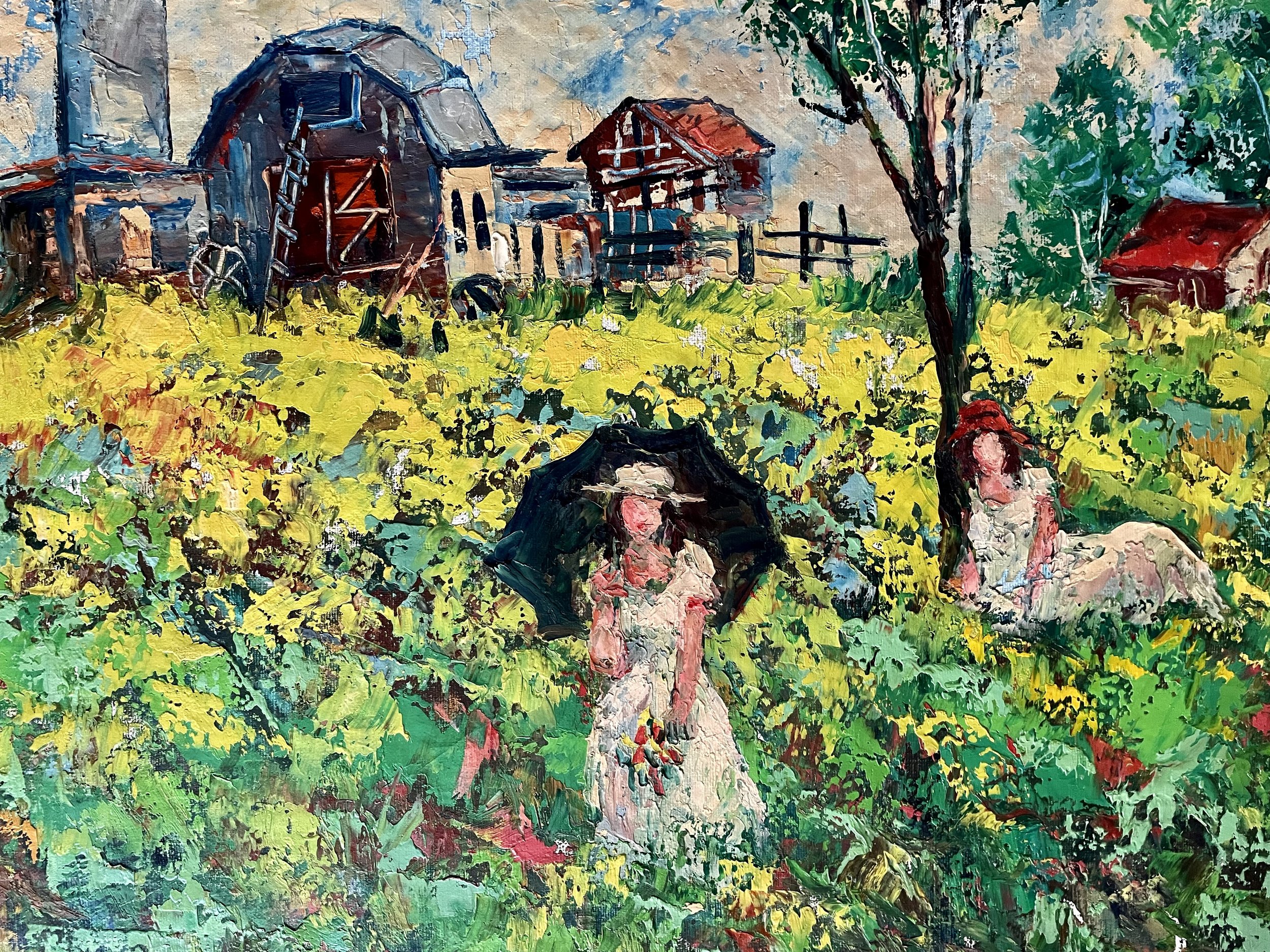
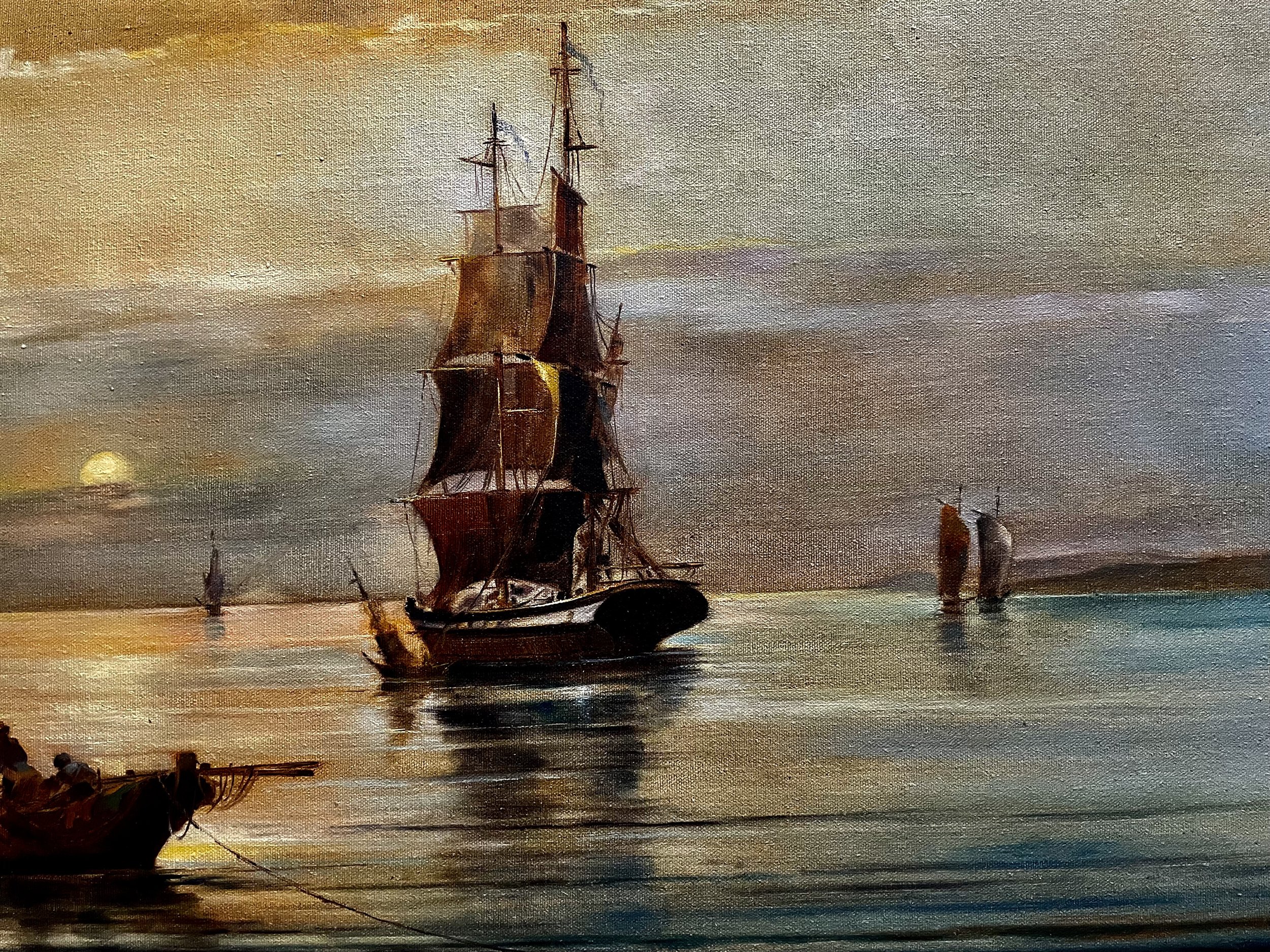
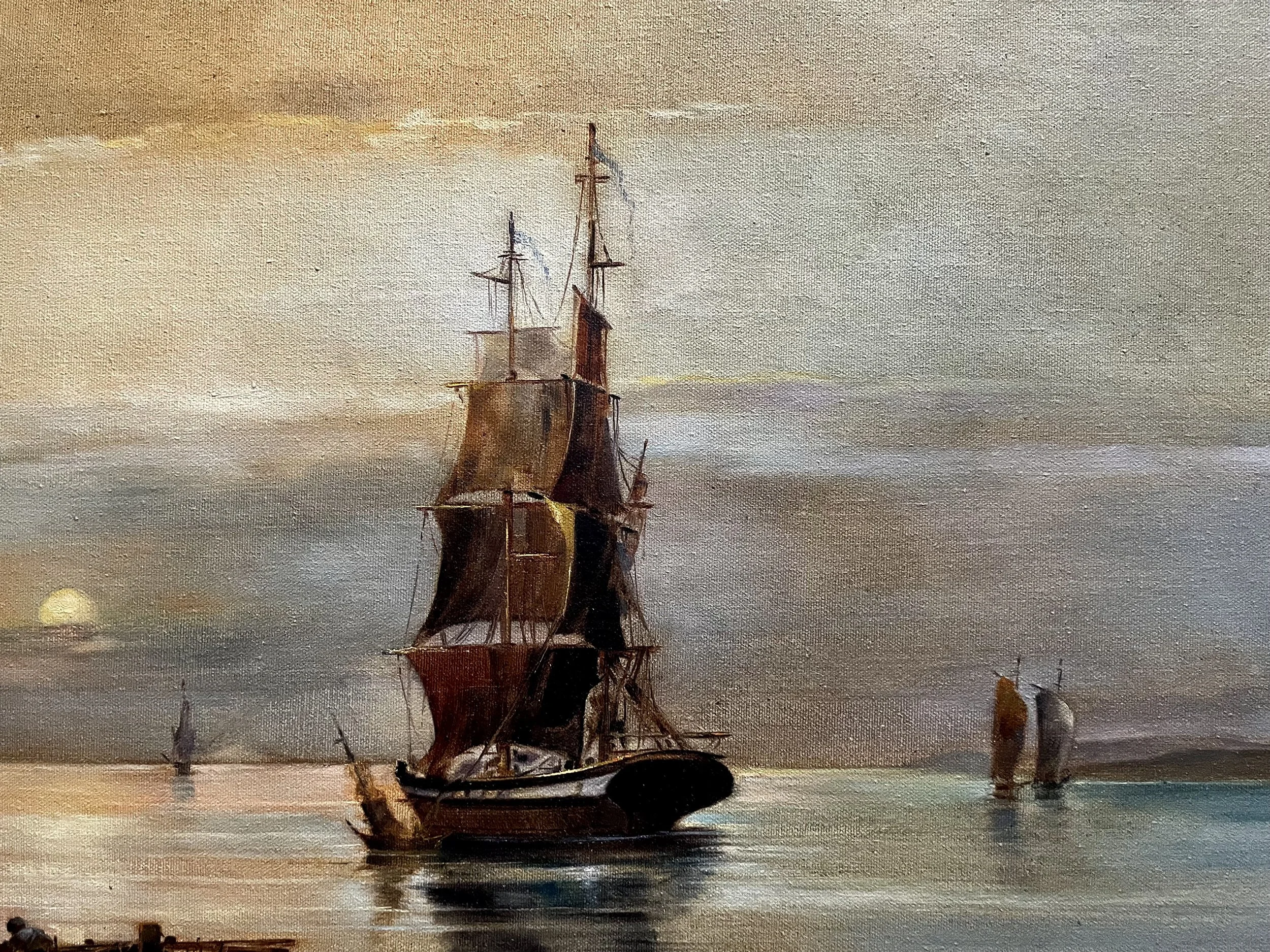
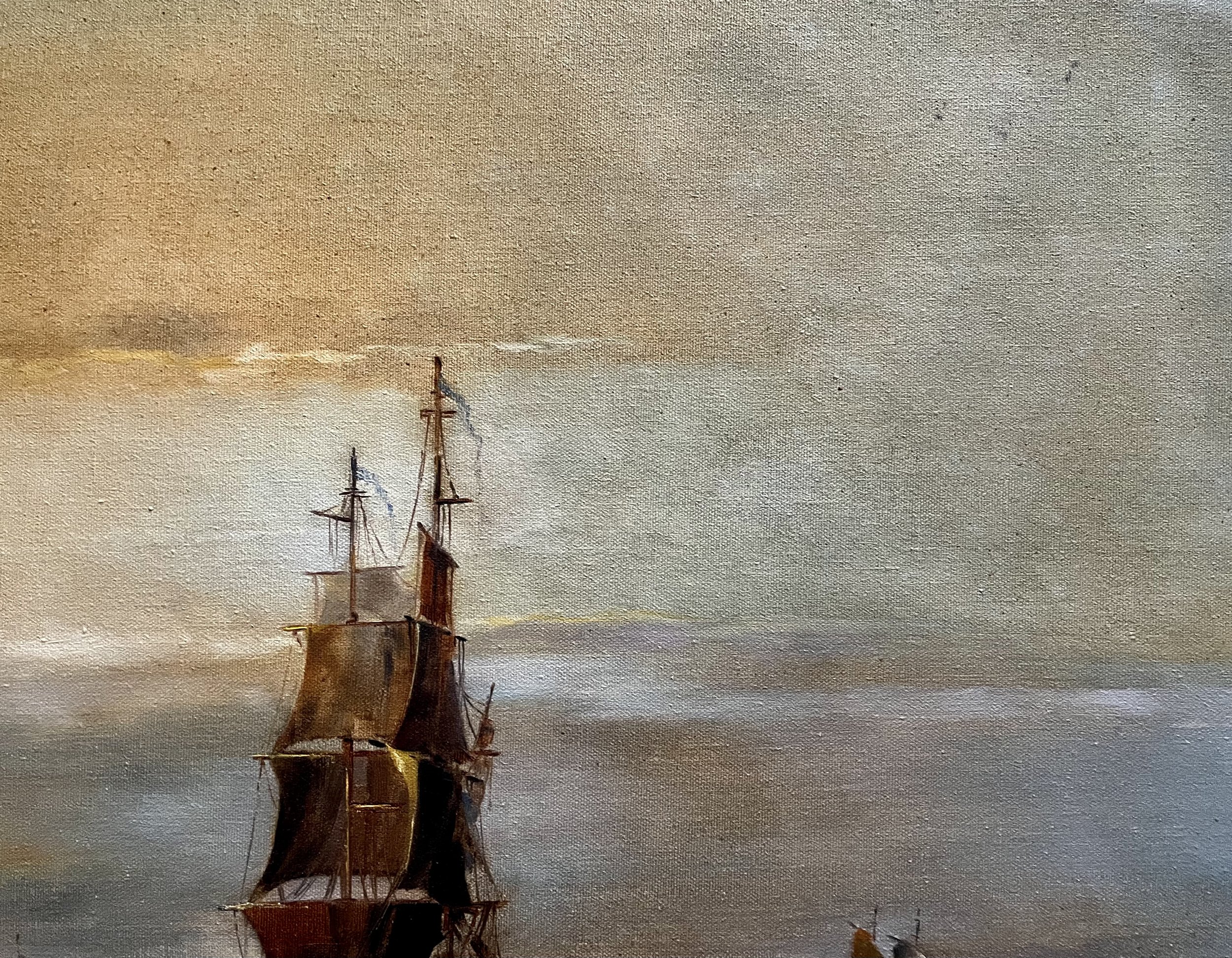
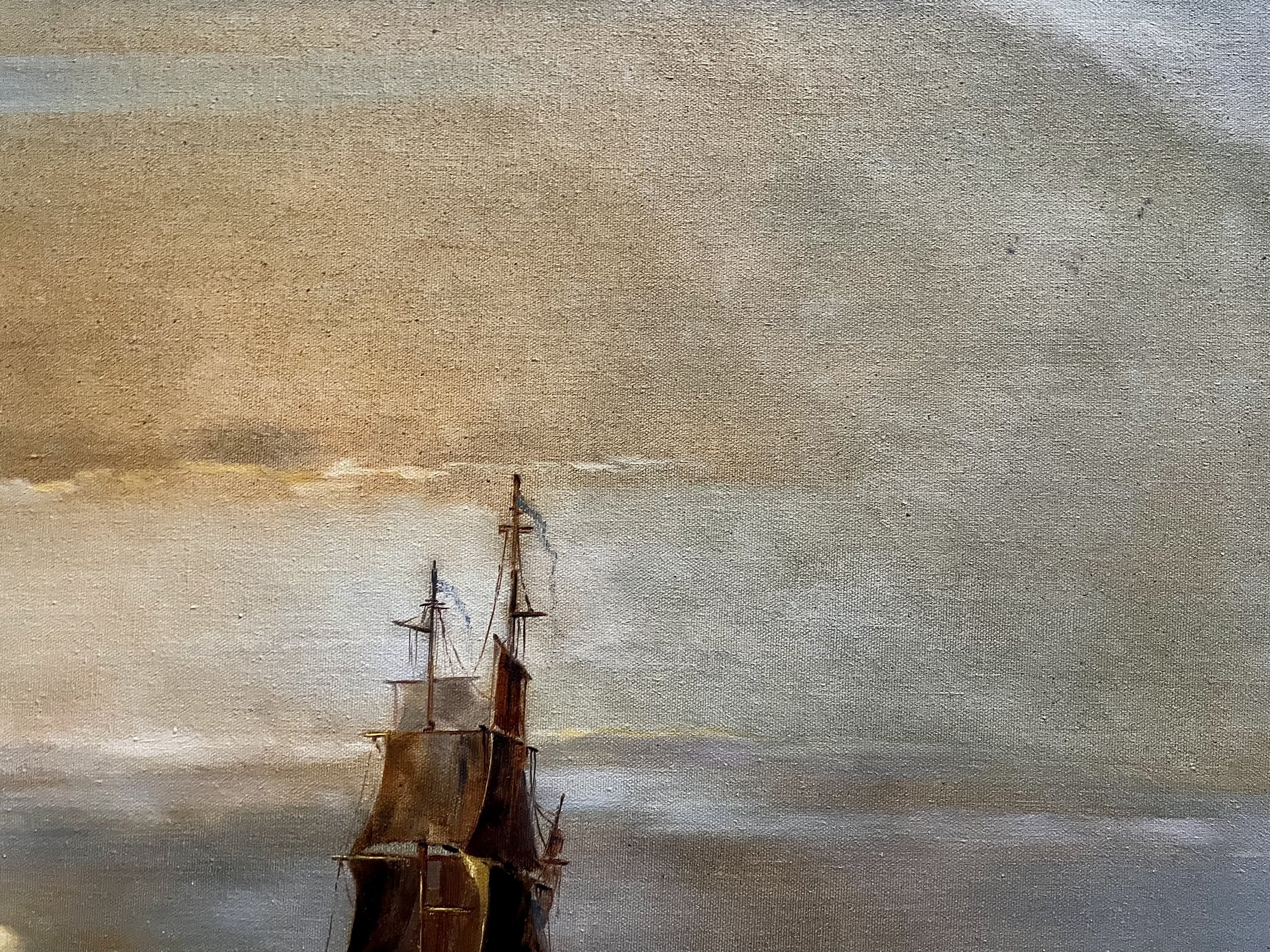
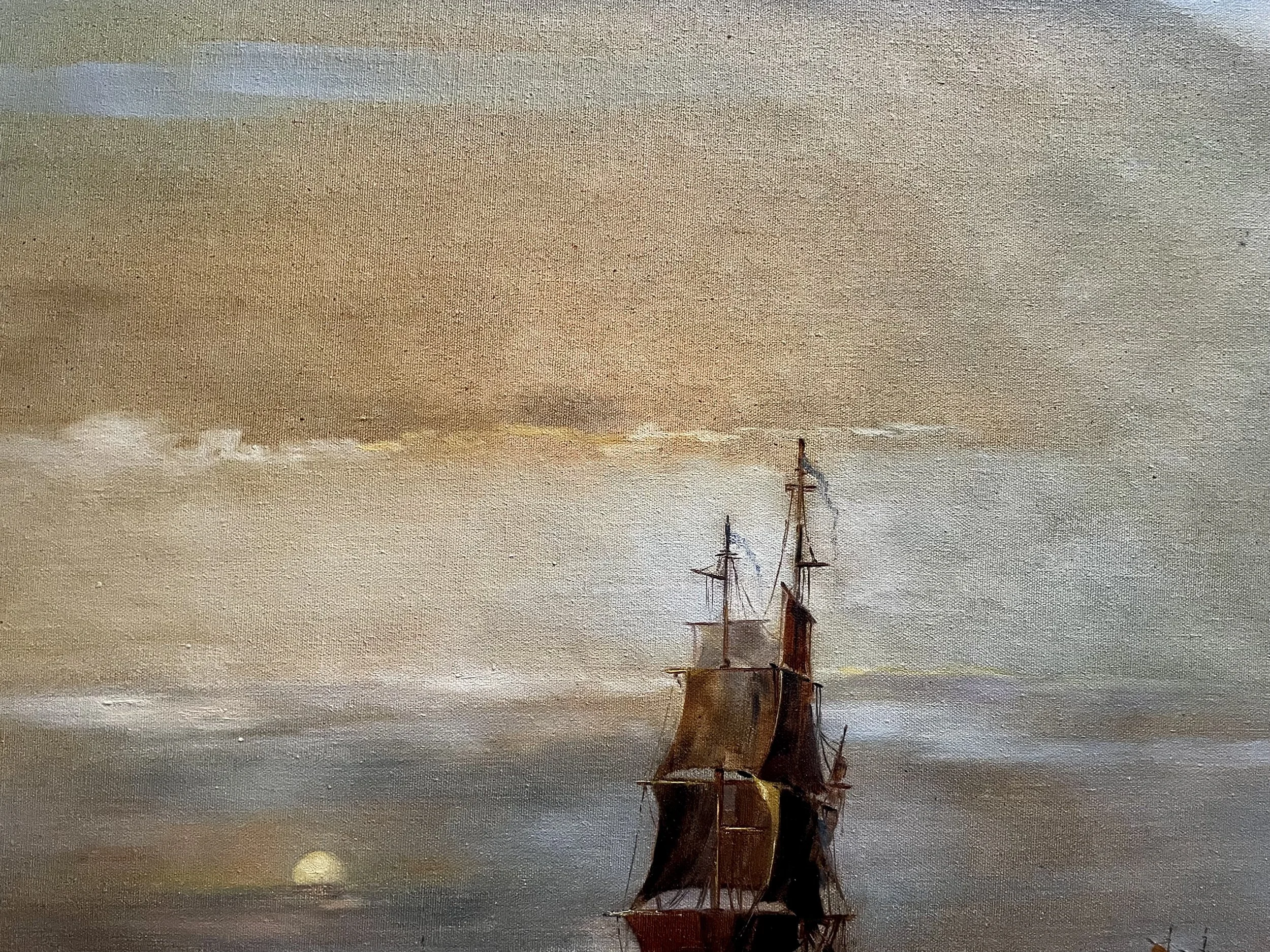
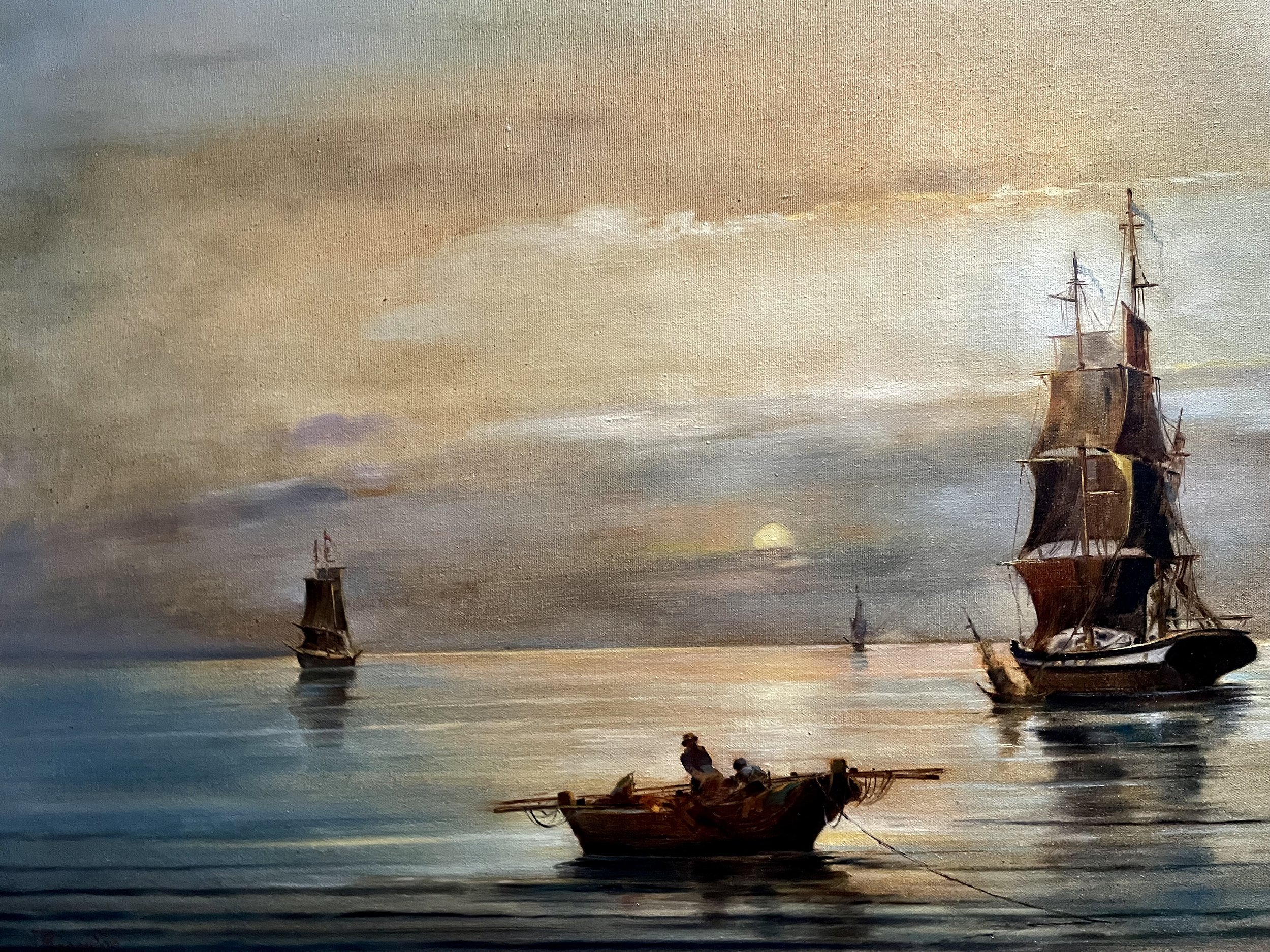
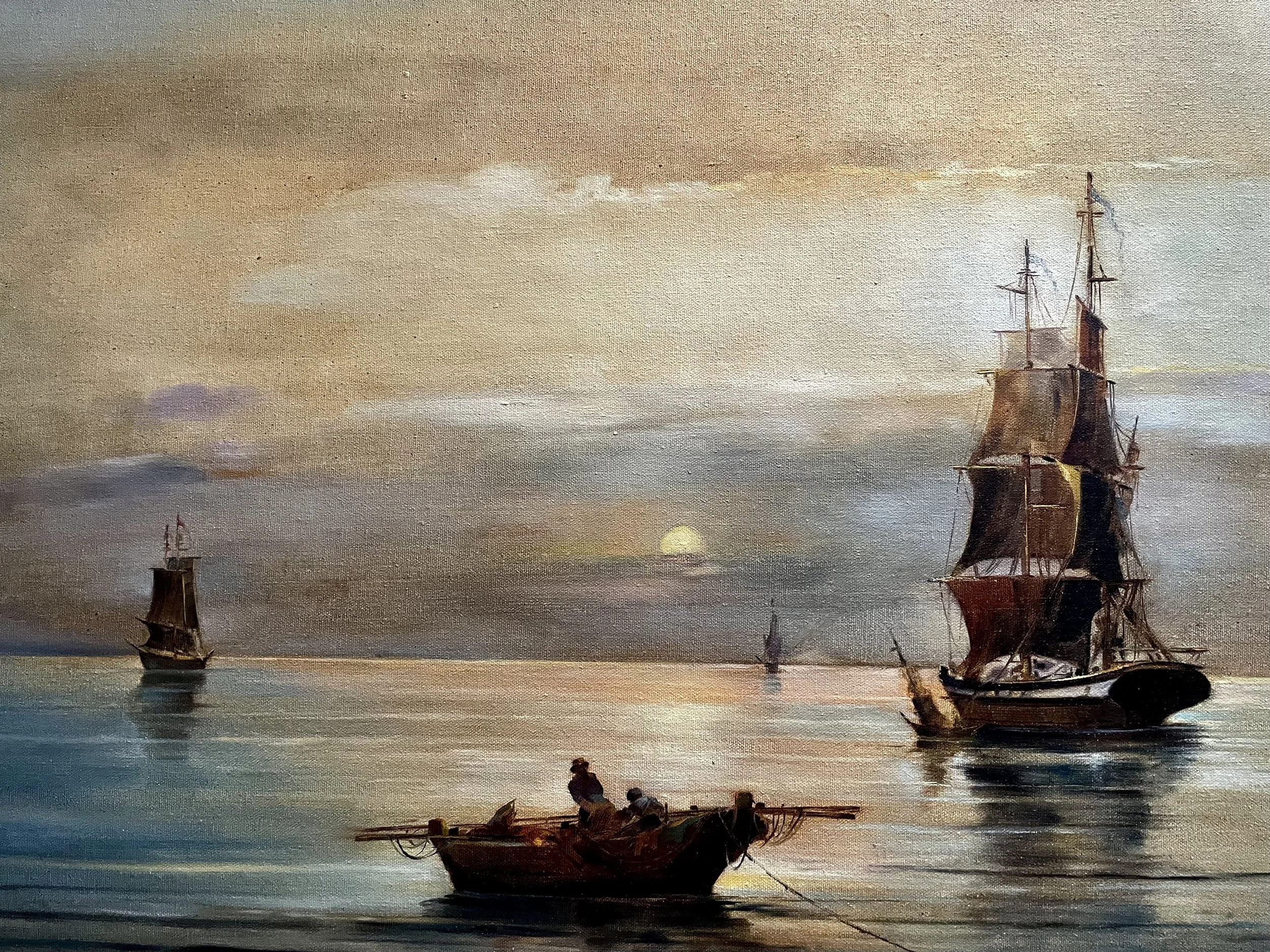
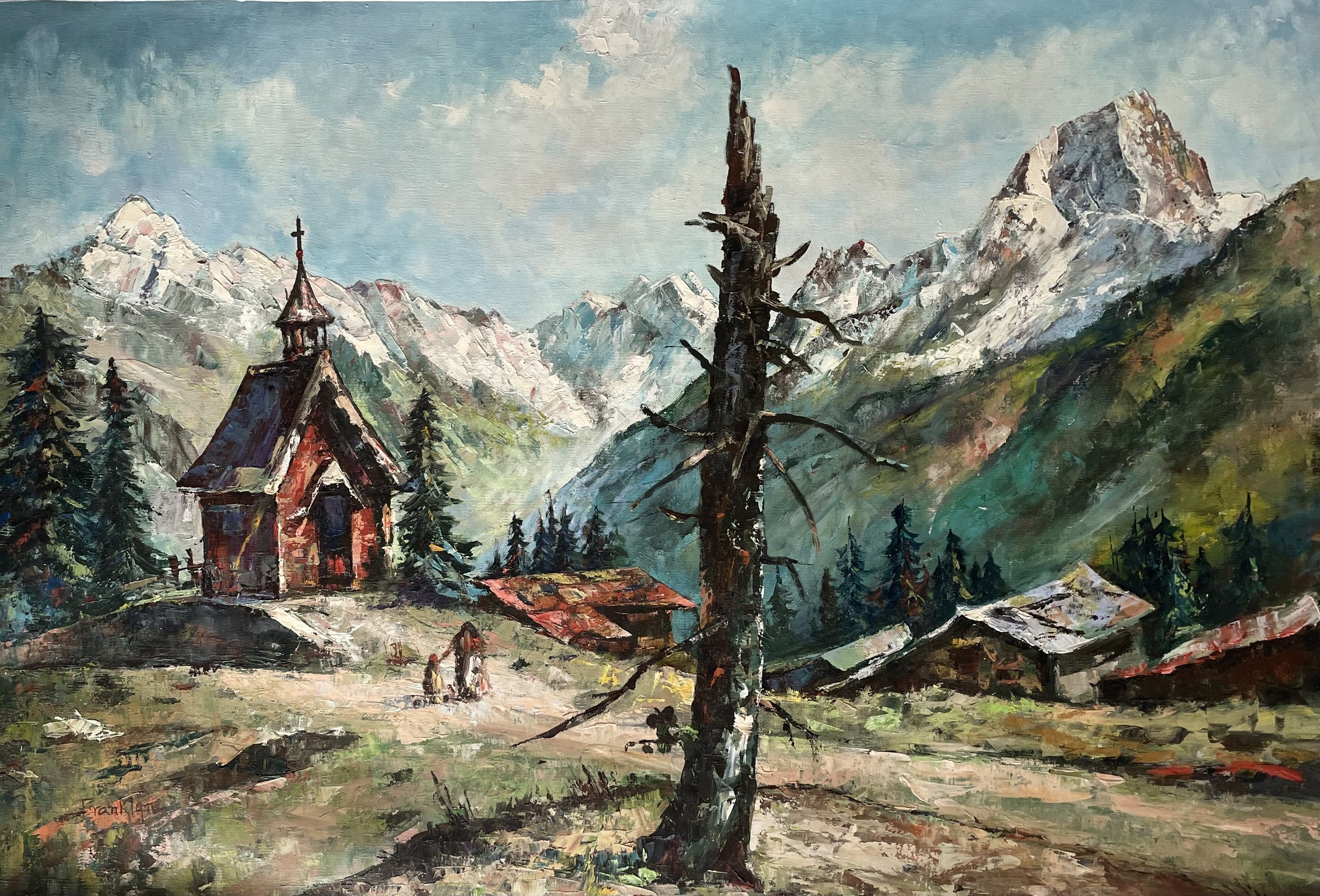
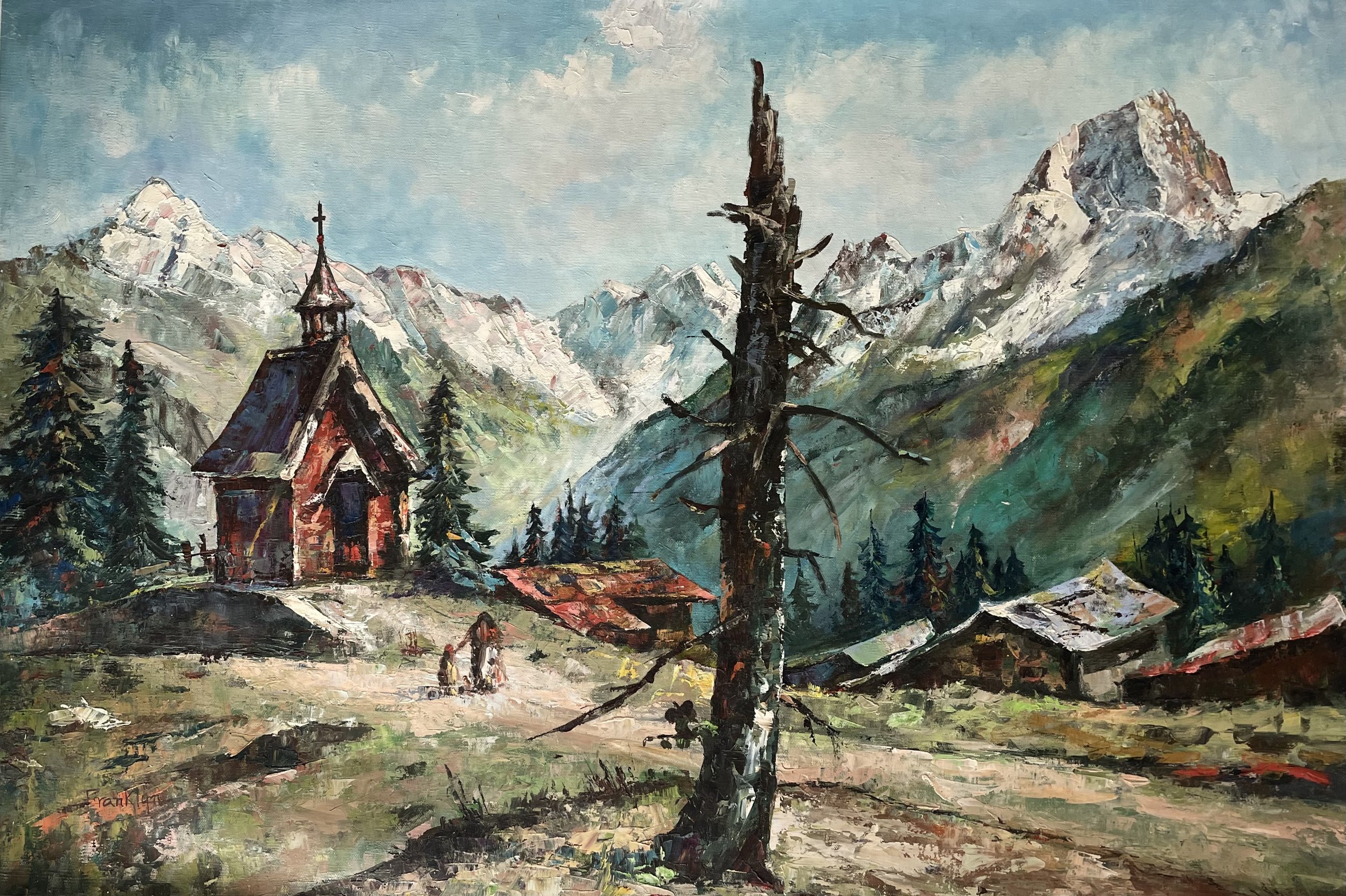
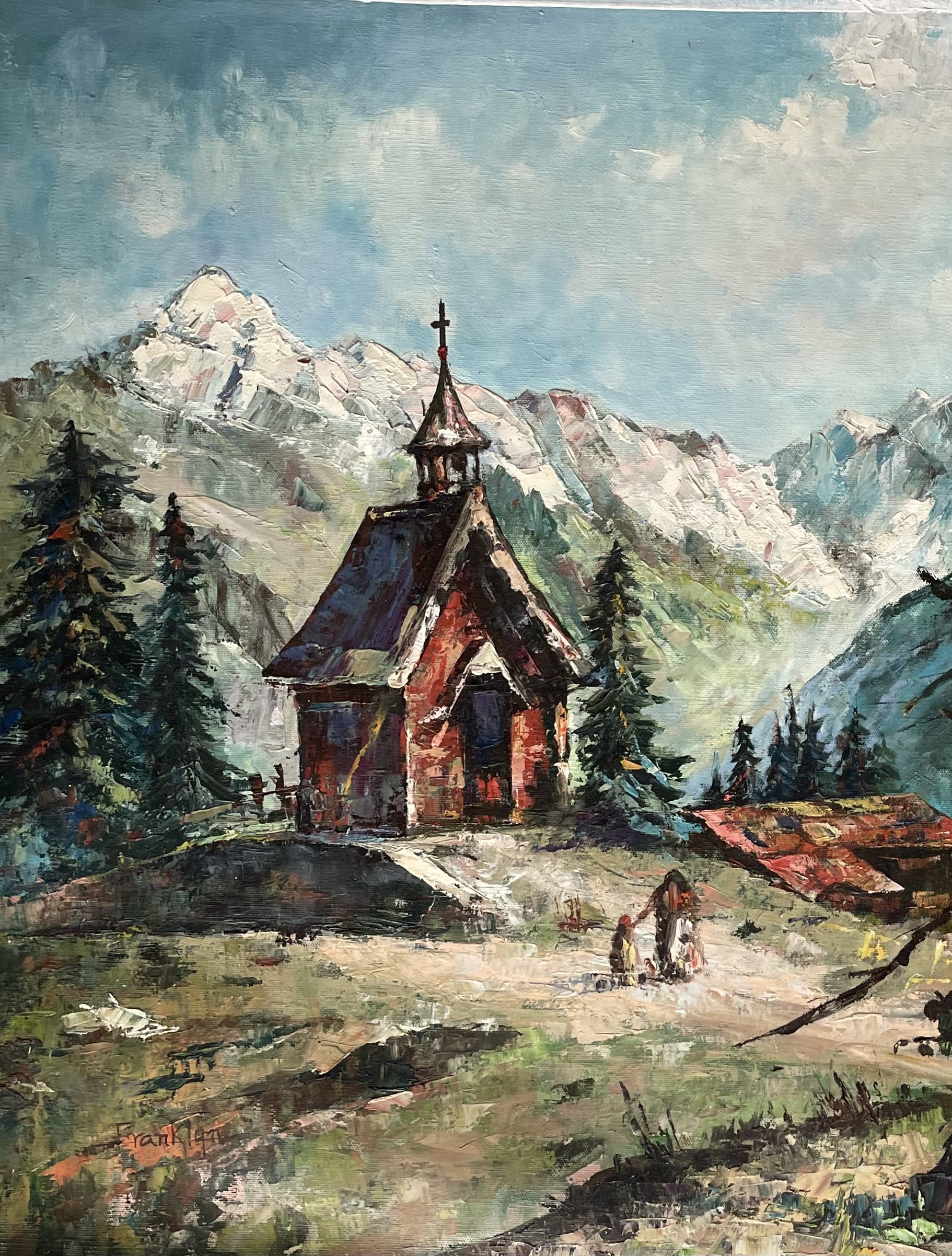
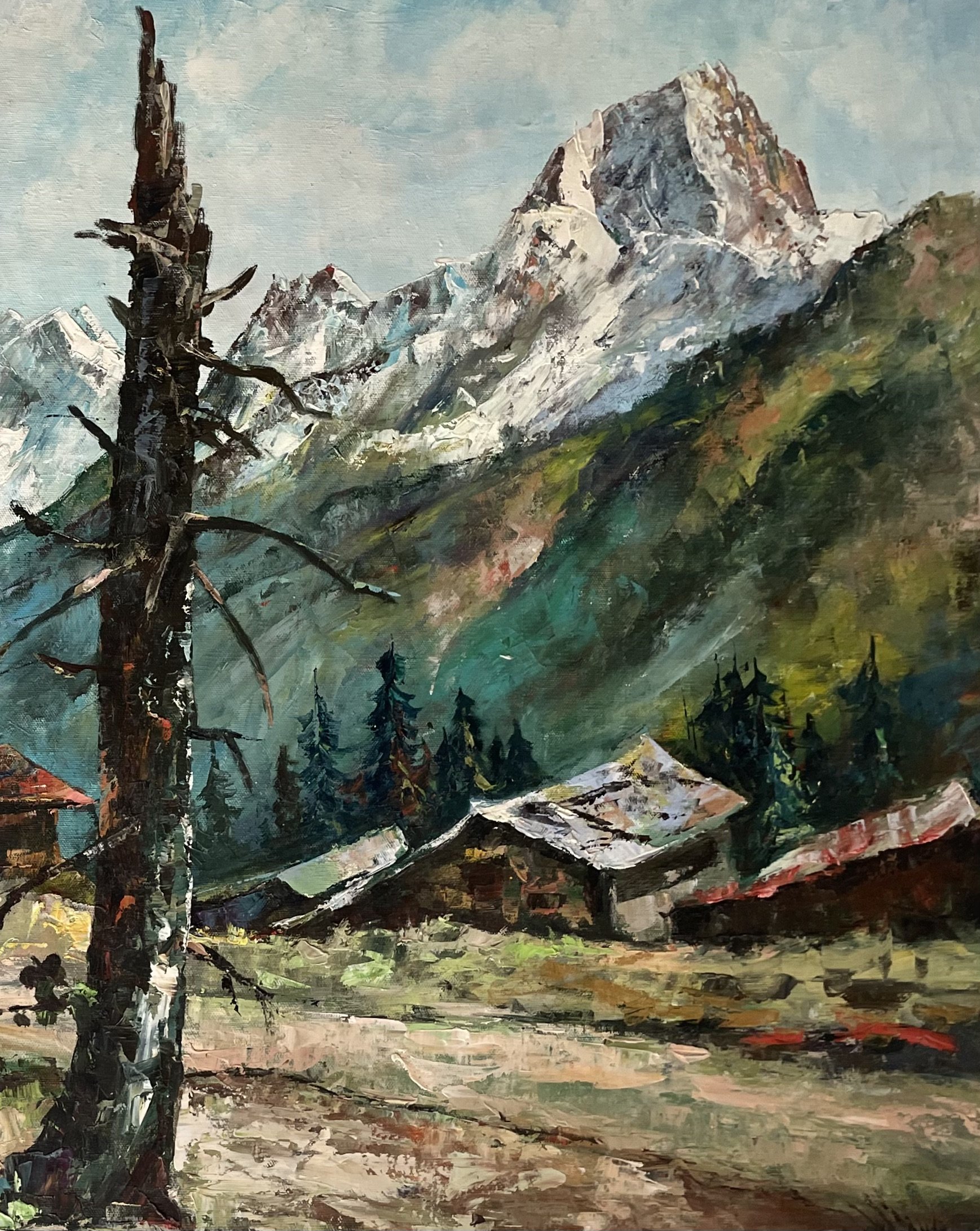
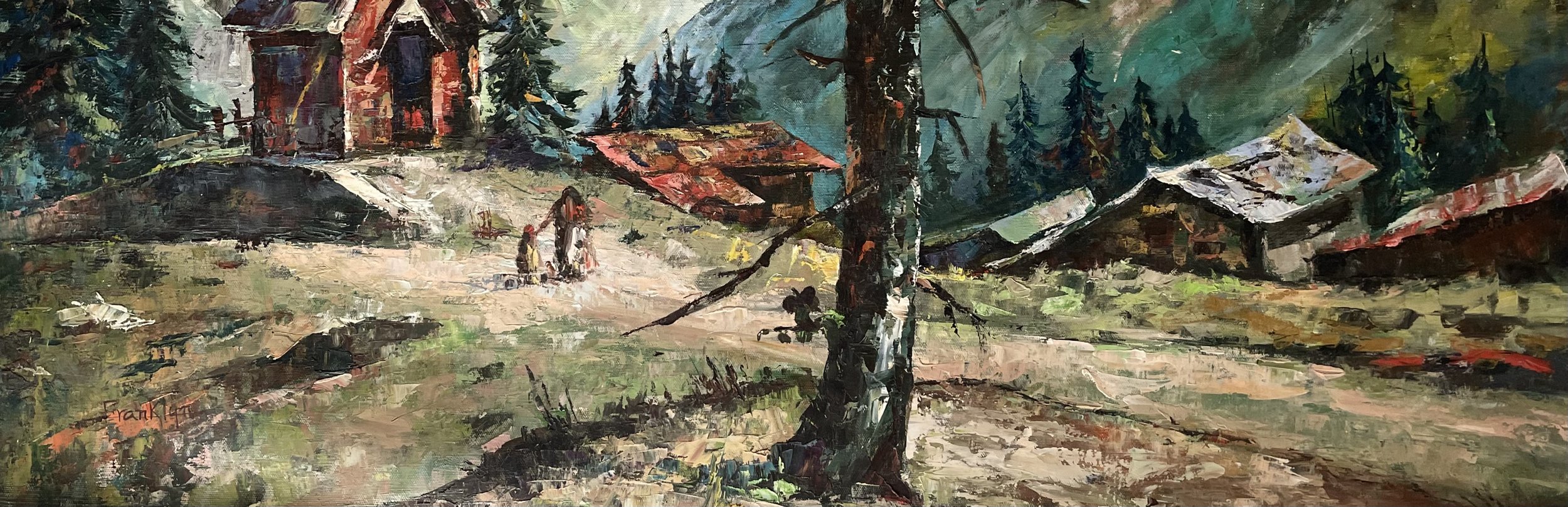
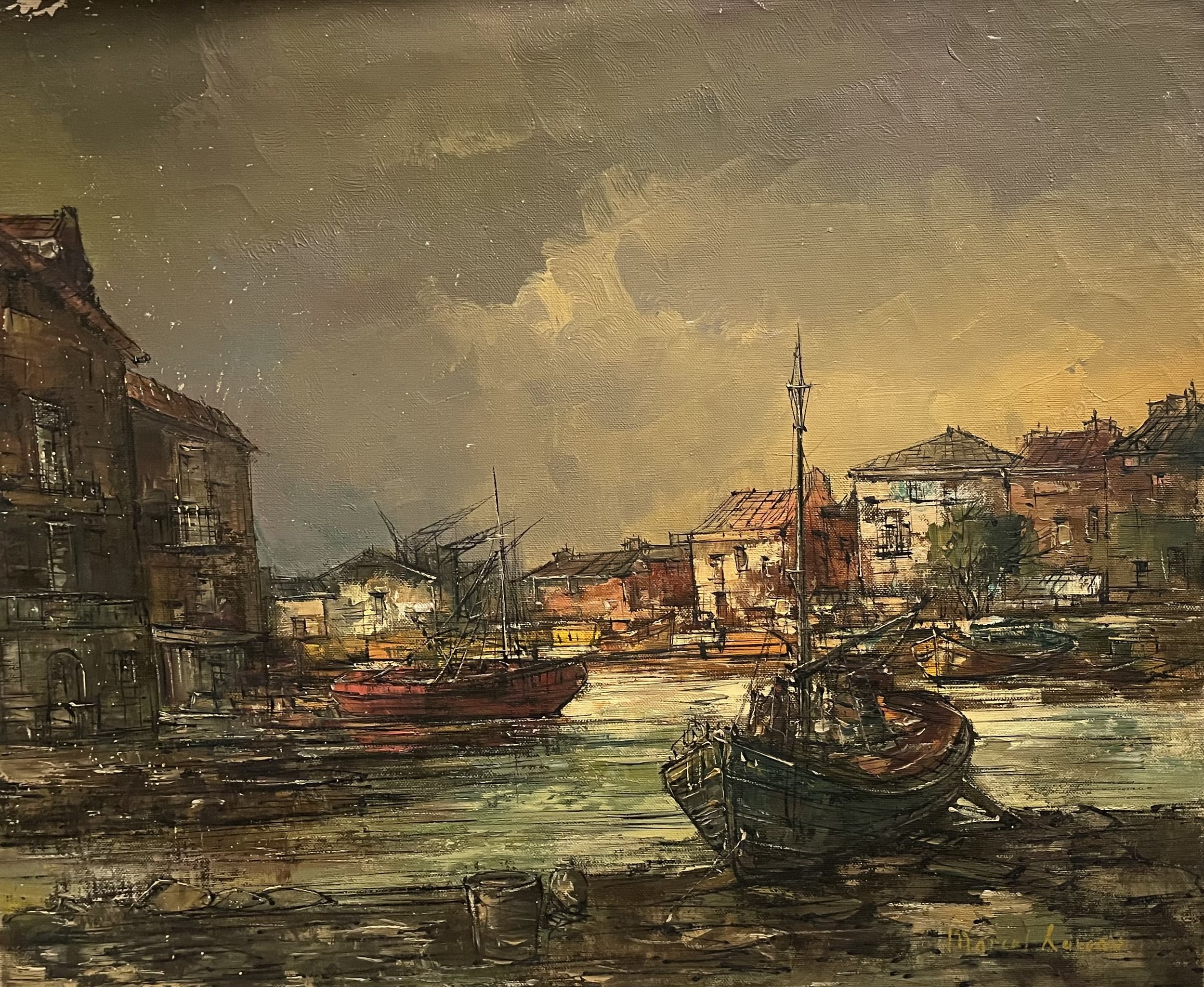
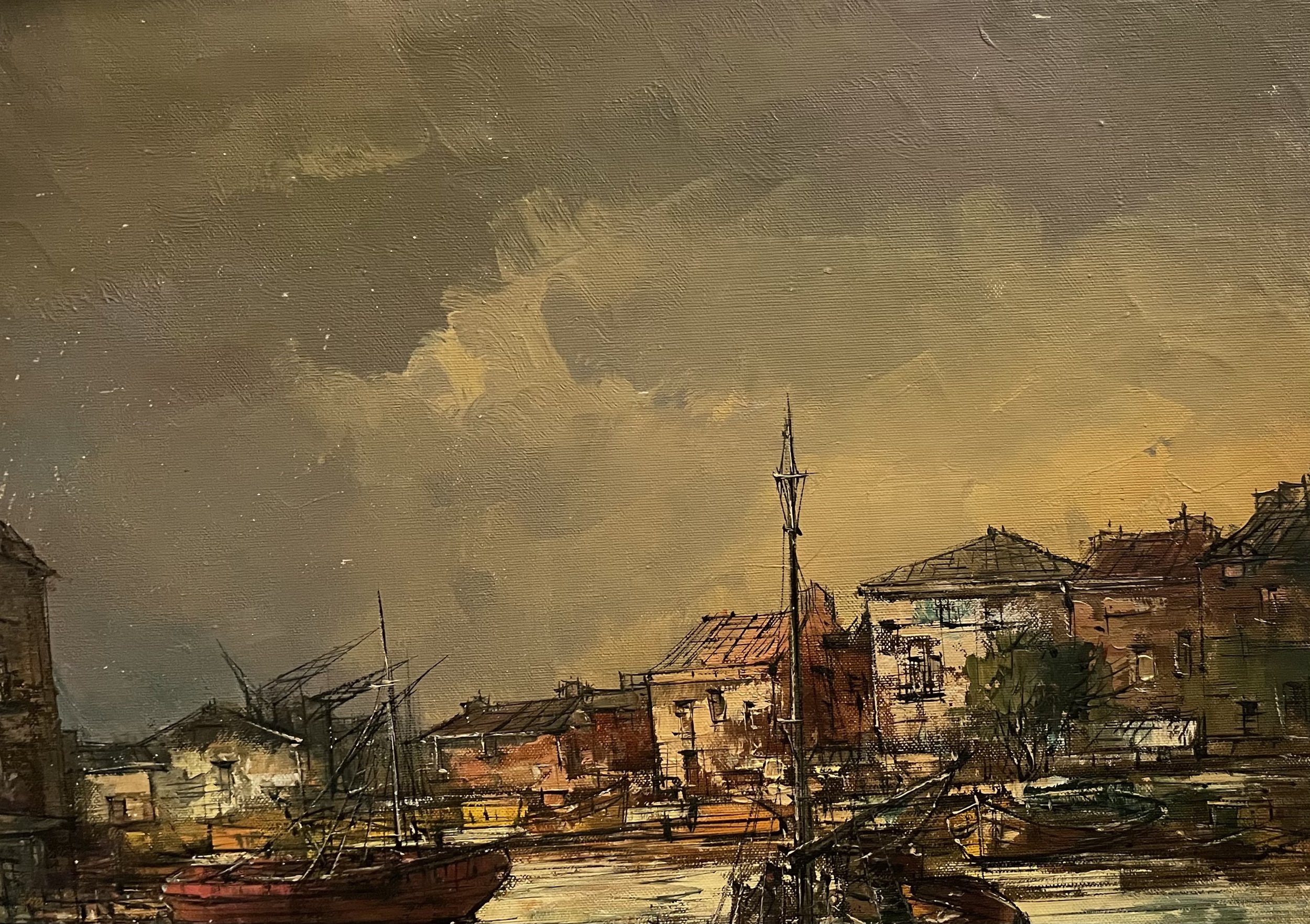
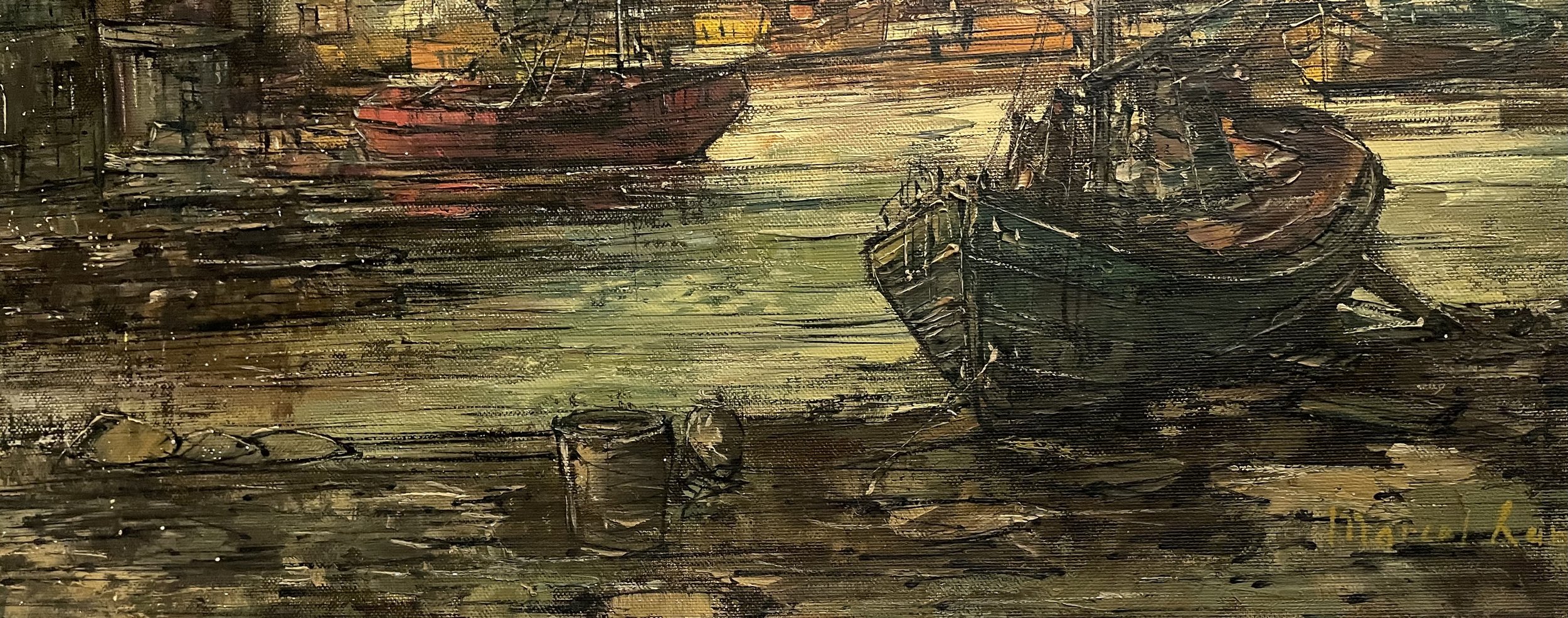
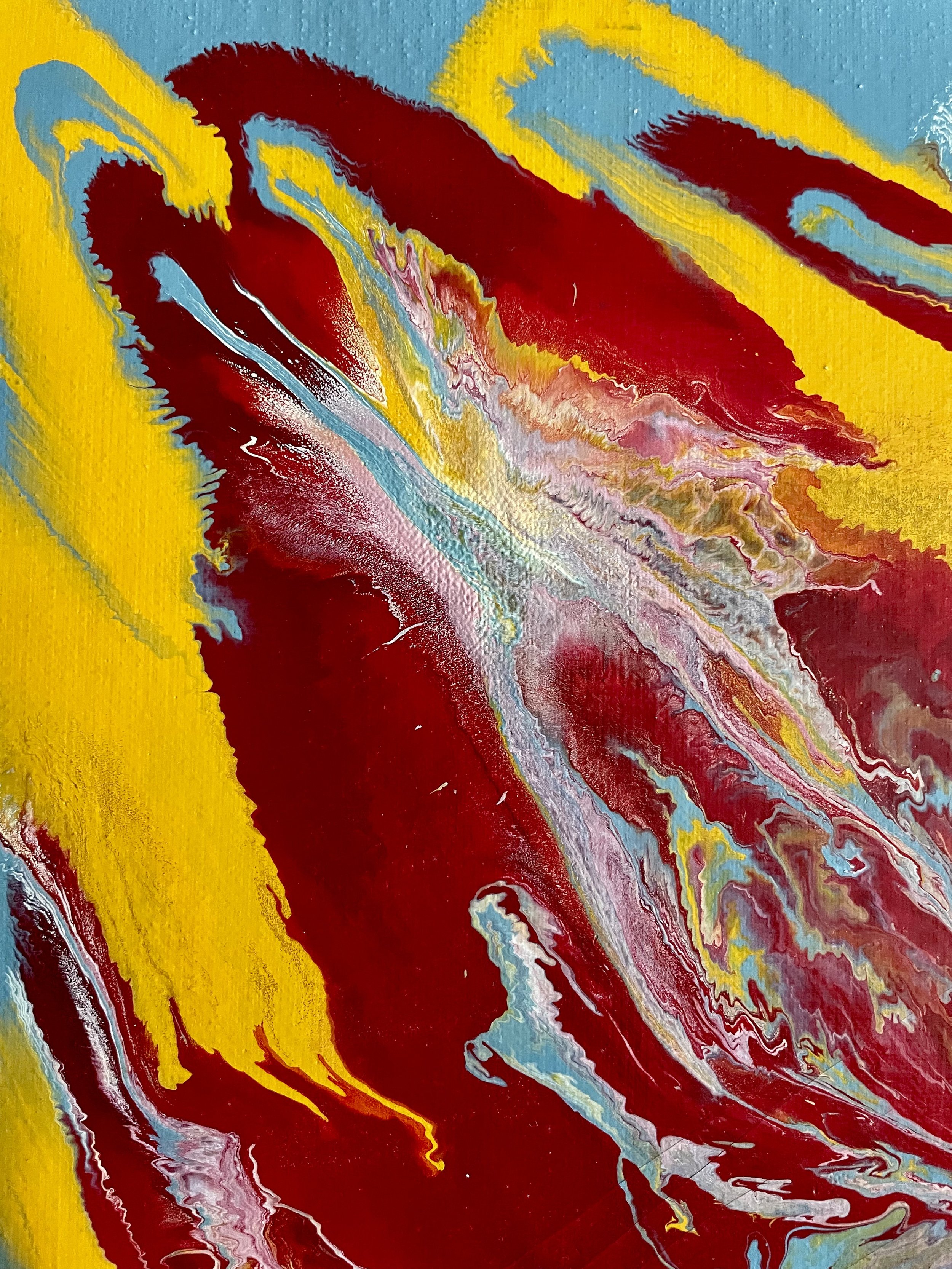
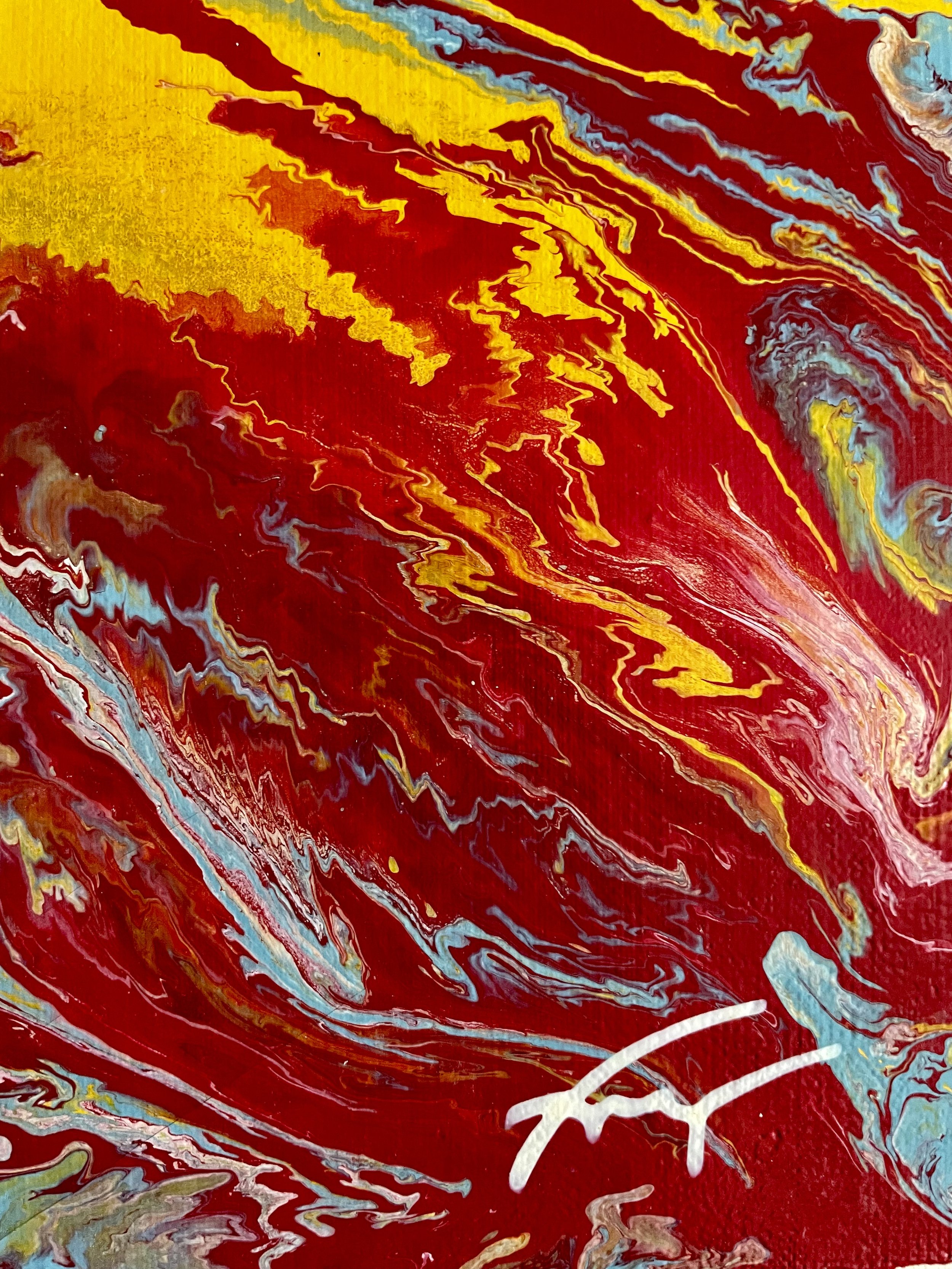
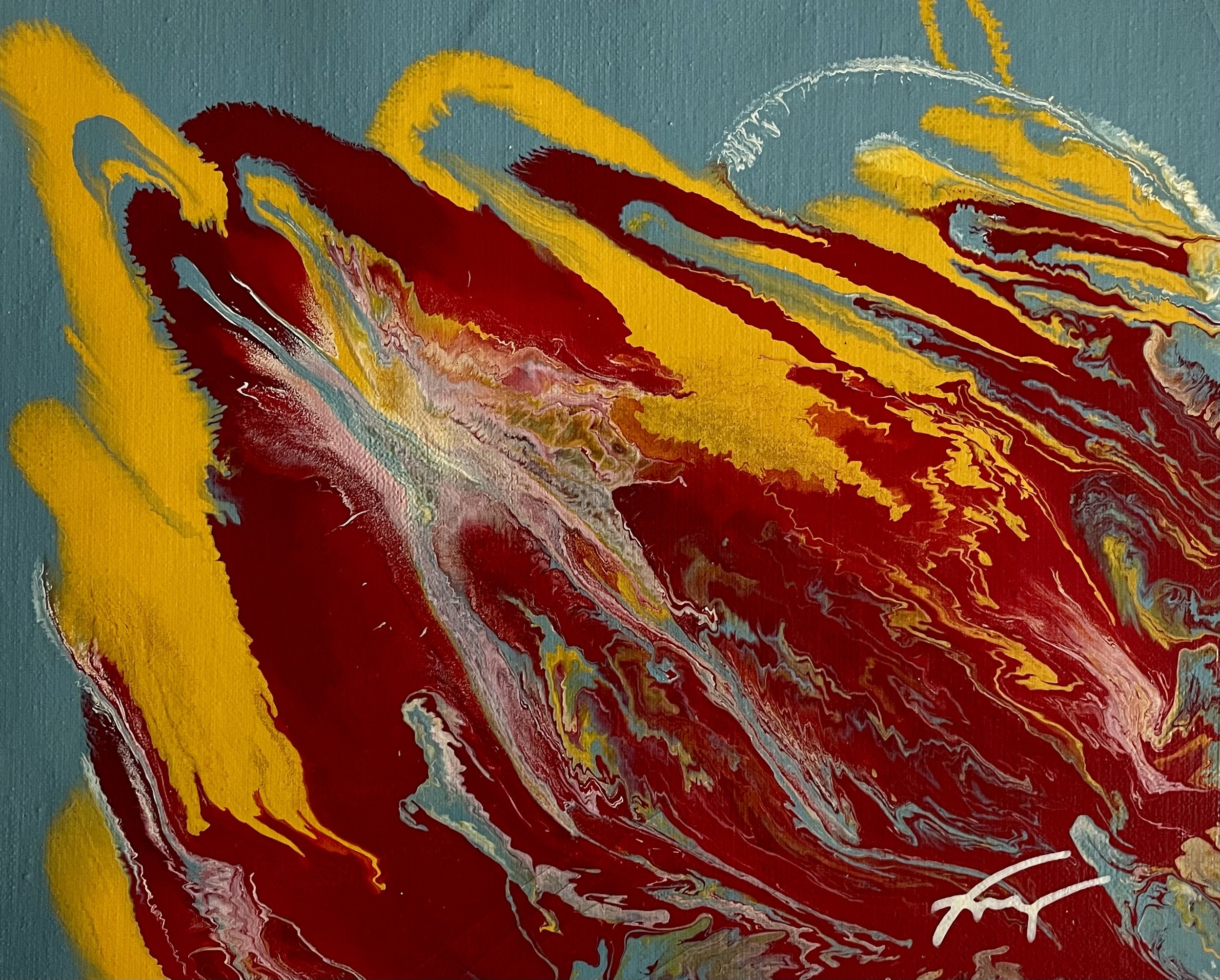
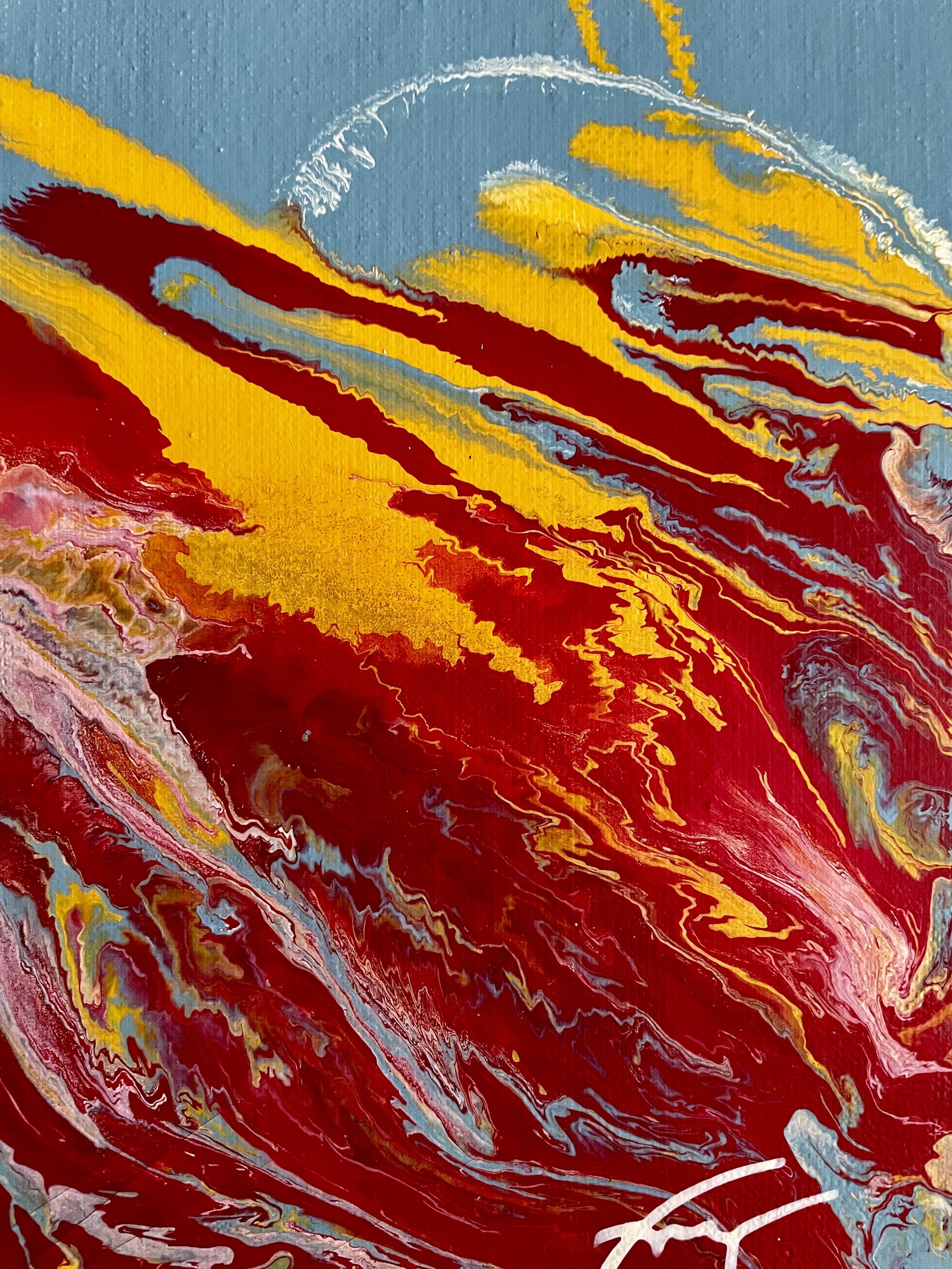
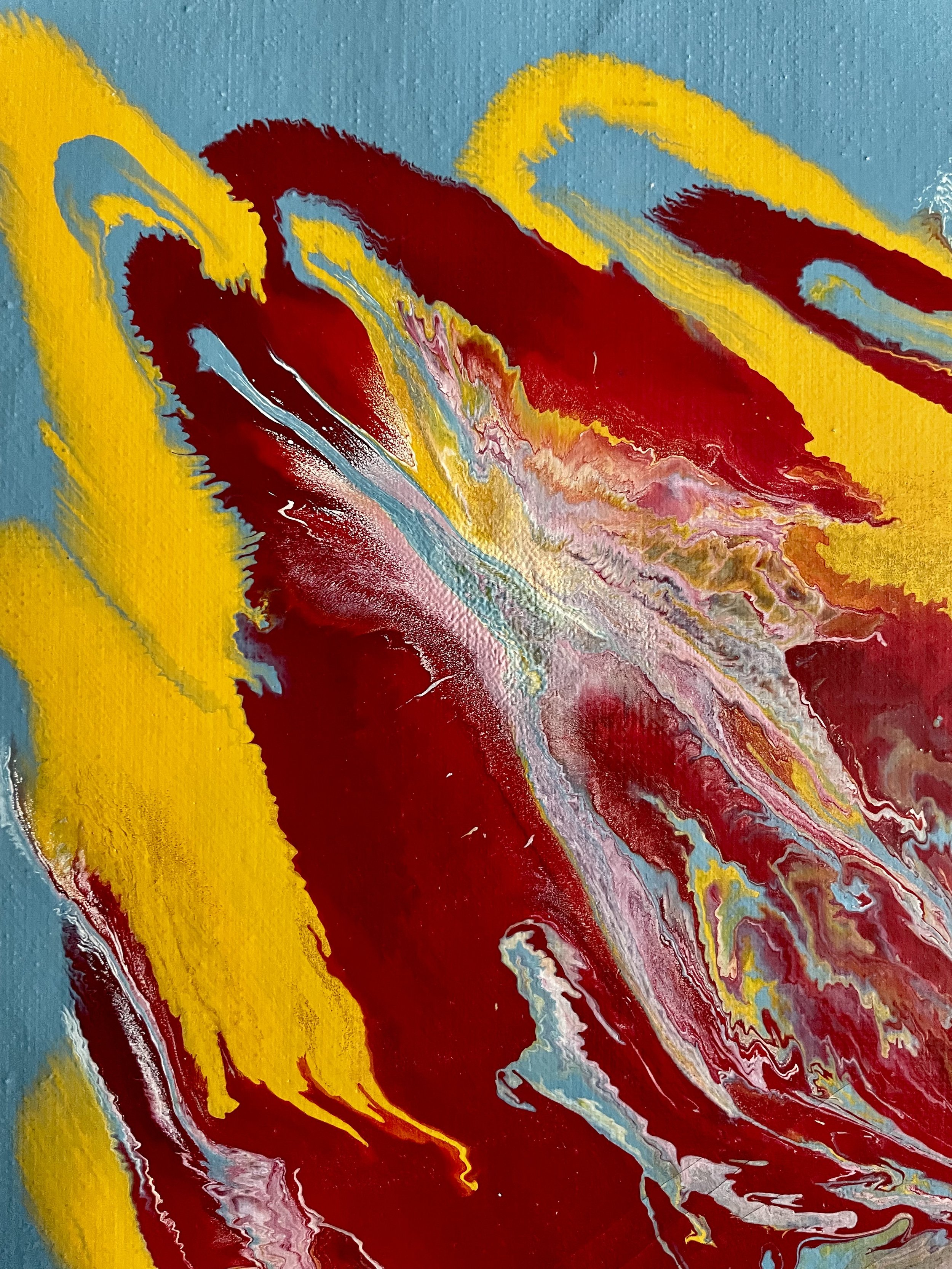
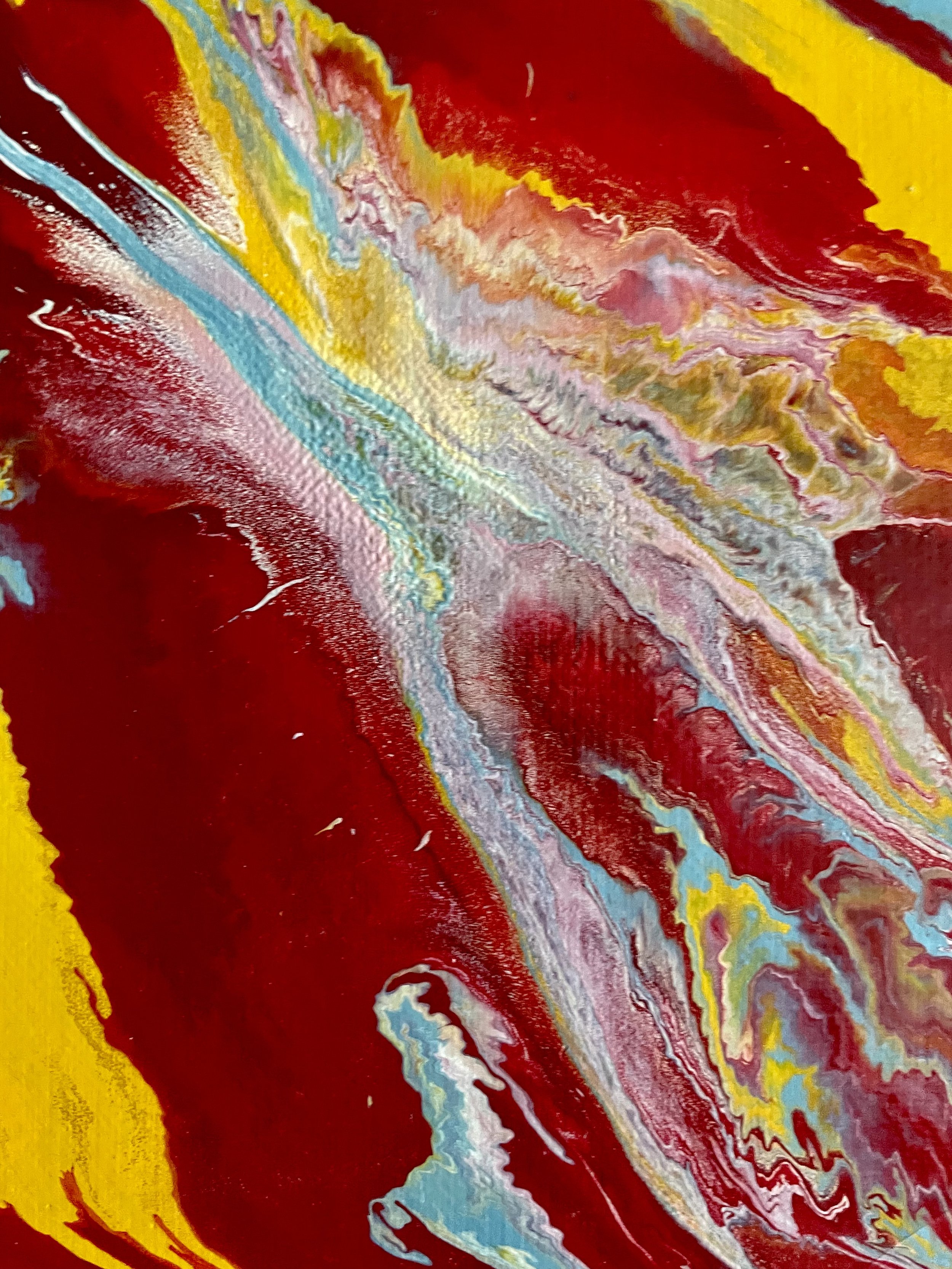
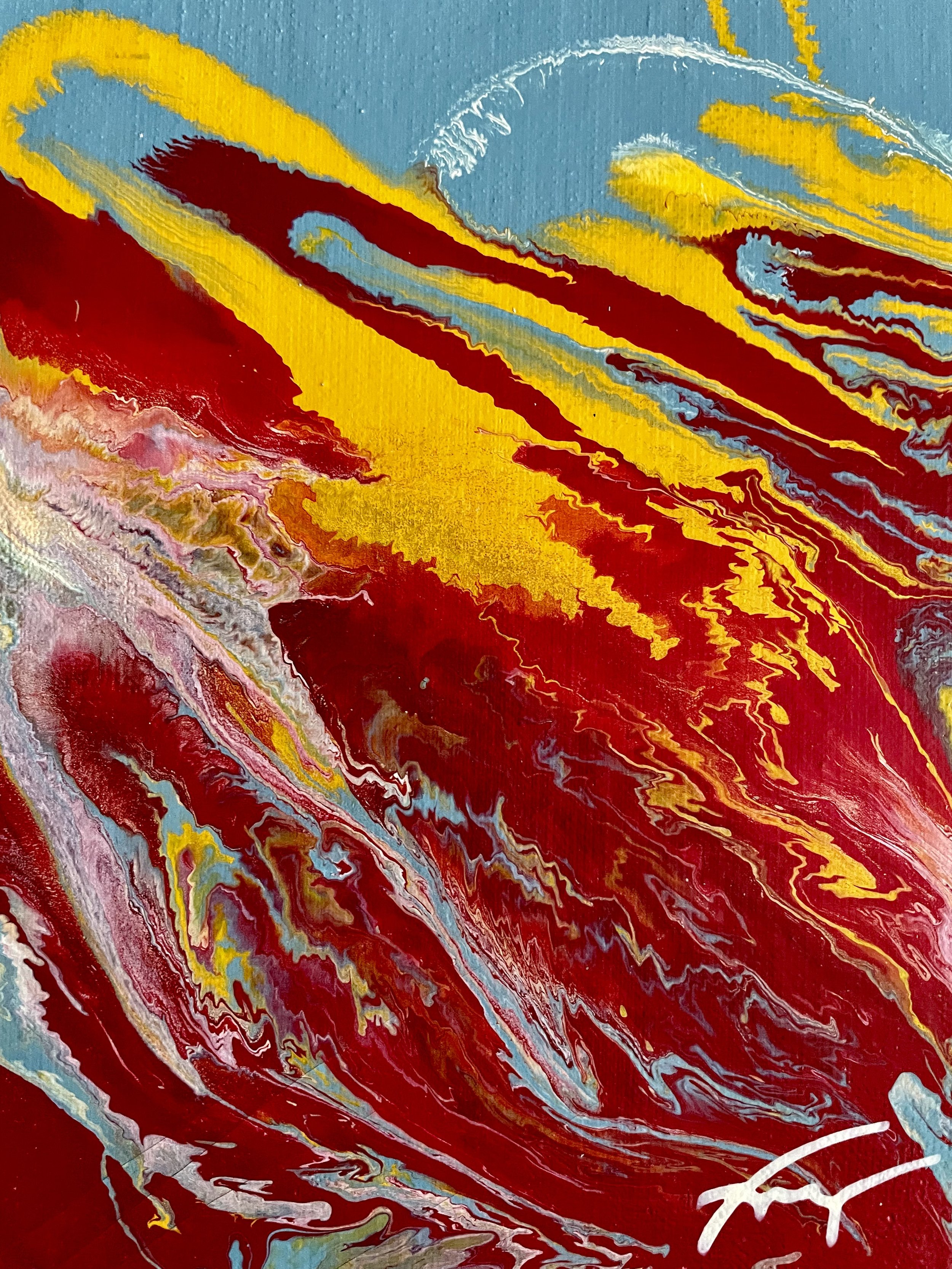
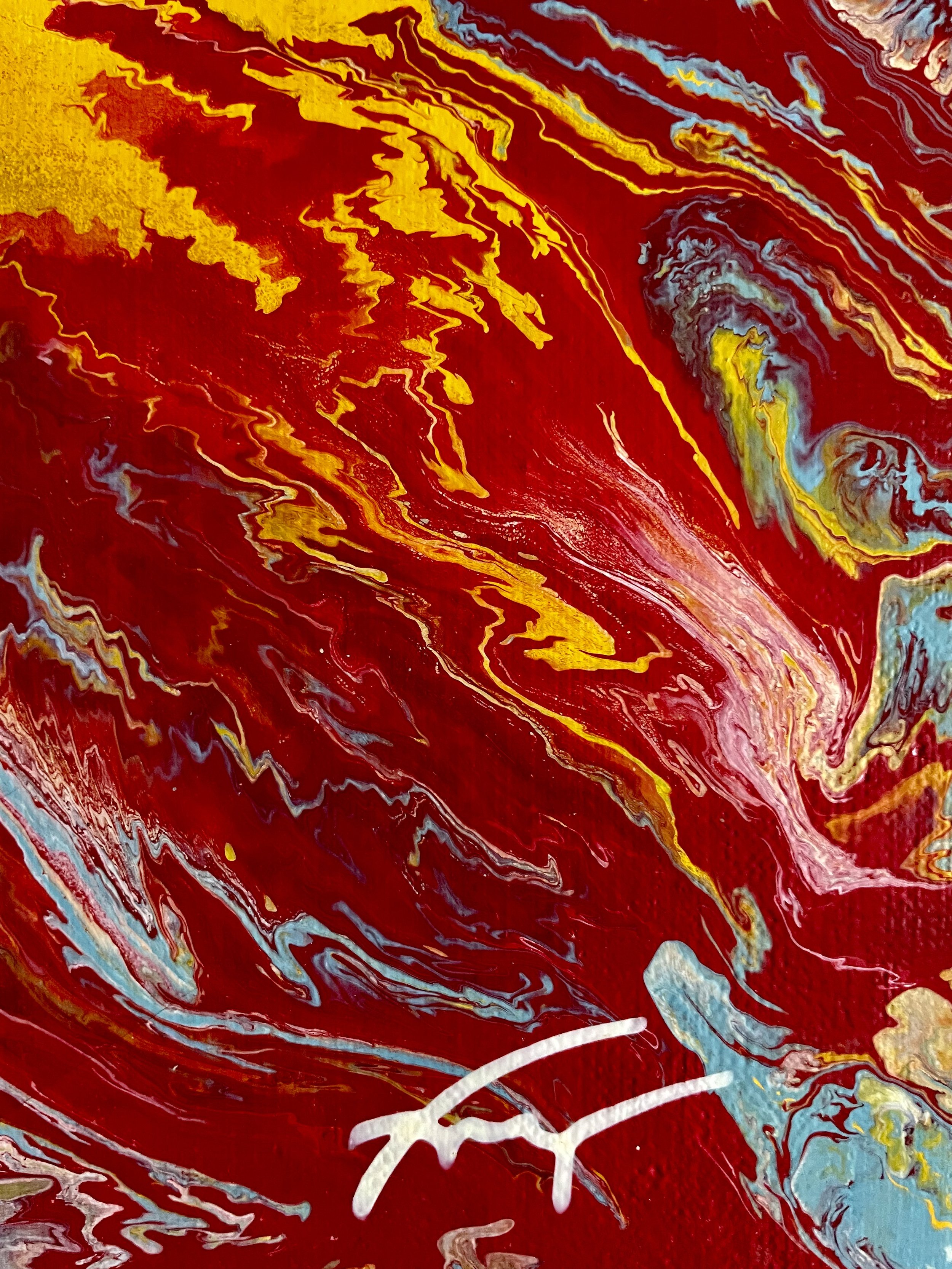
David Smira, Untitled Pastoral Farm Scene, Oil on Canvas, 24 × 26 in.
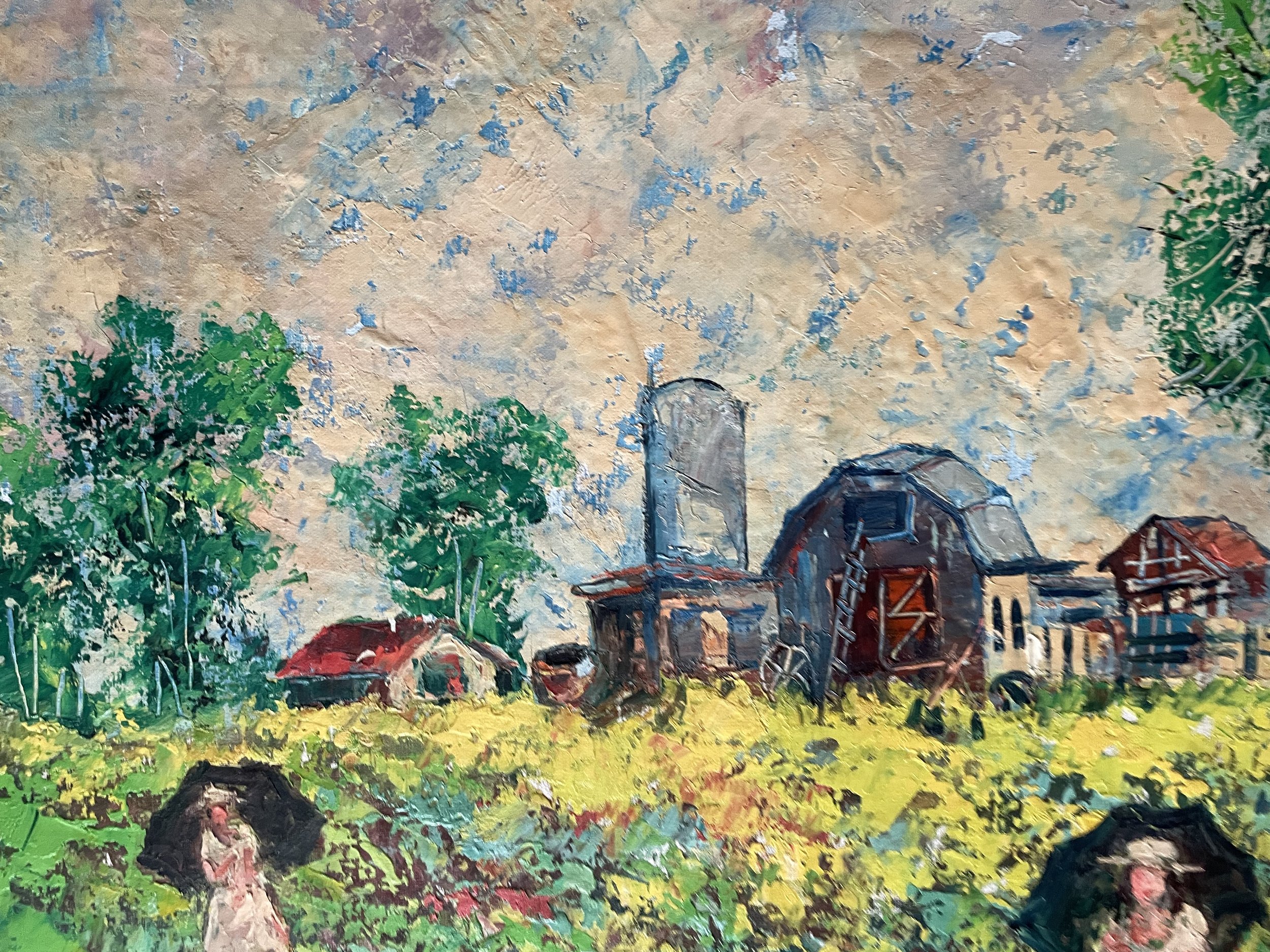
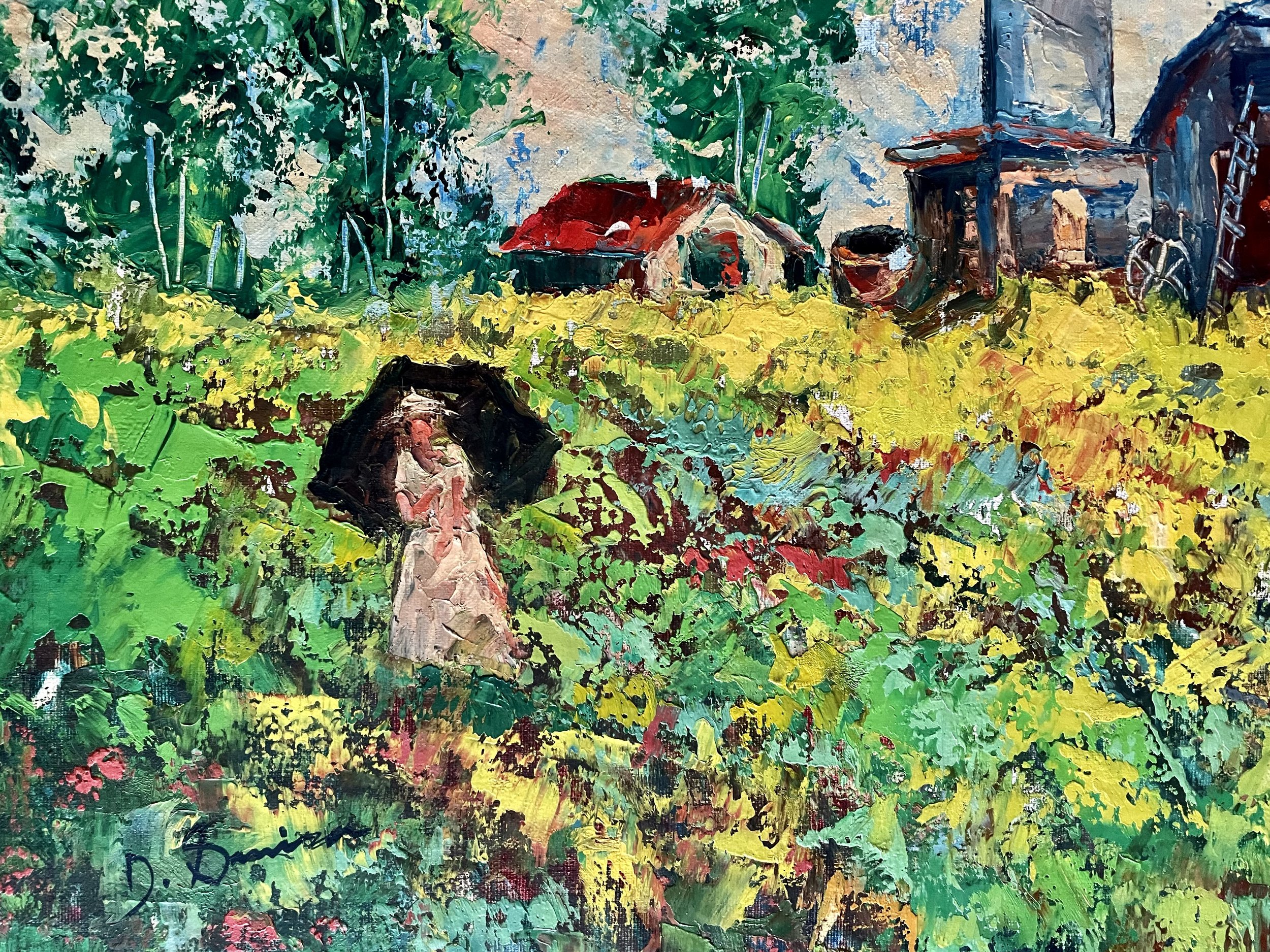
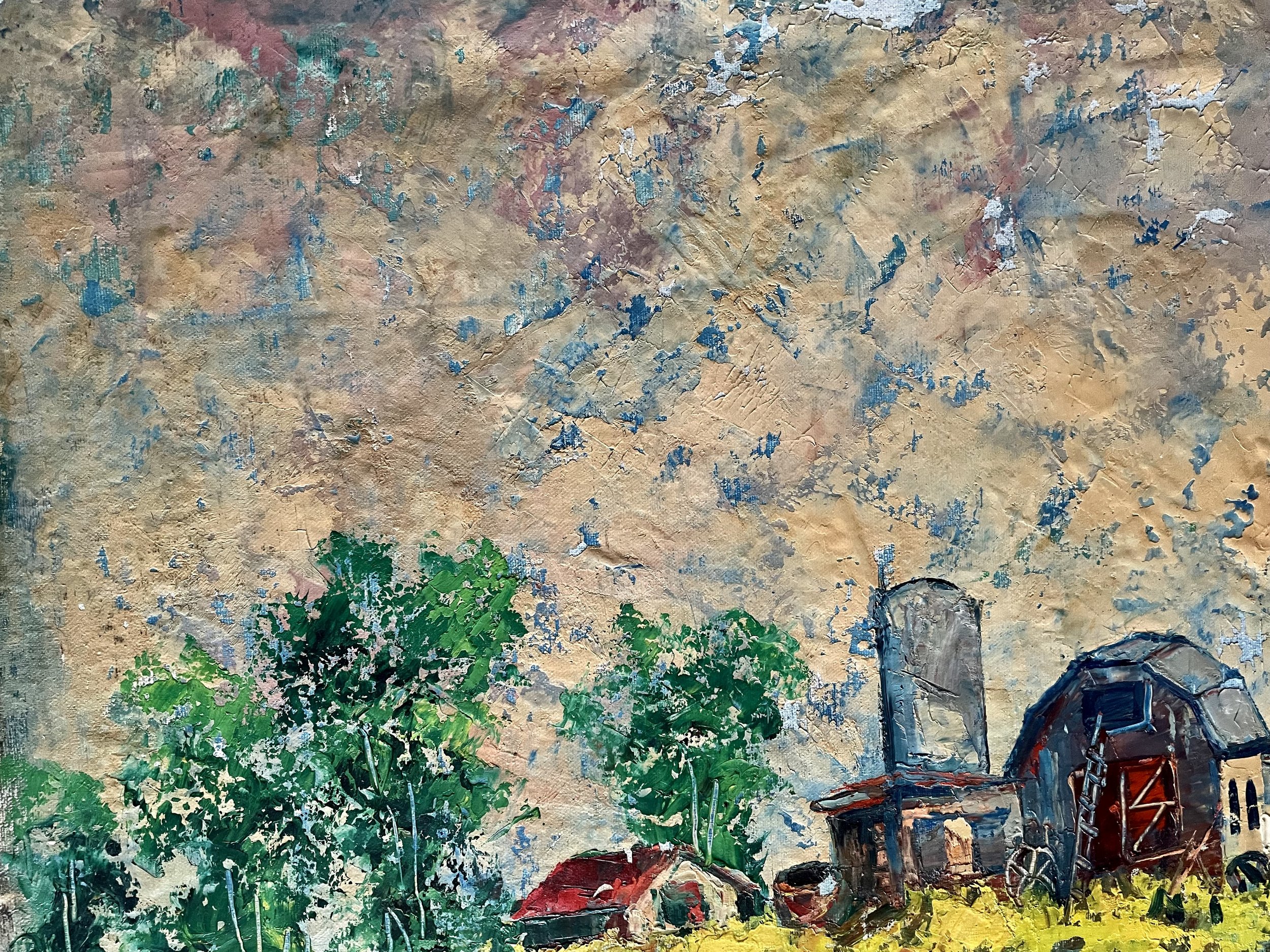
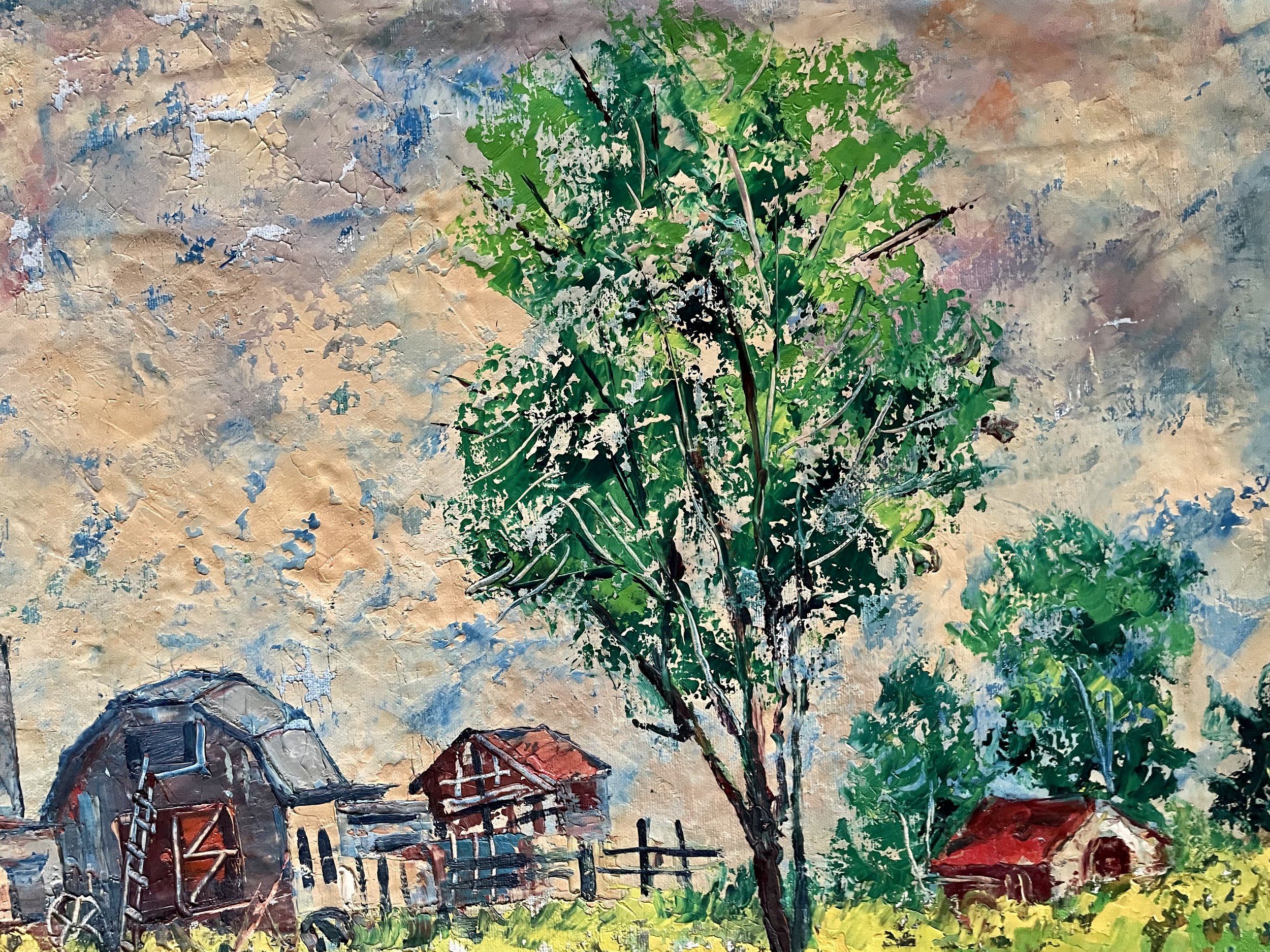
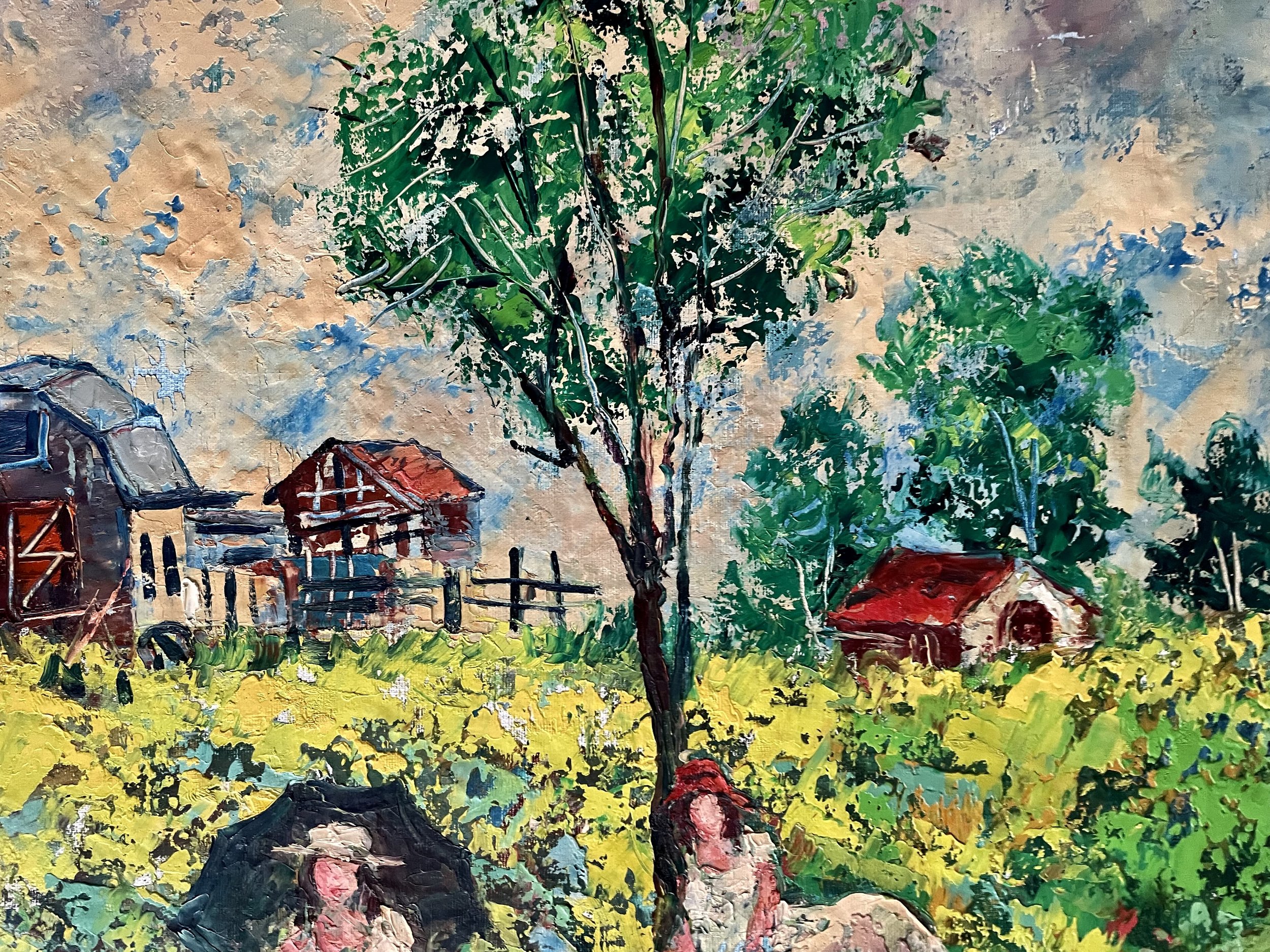
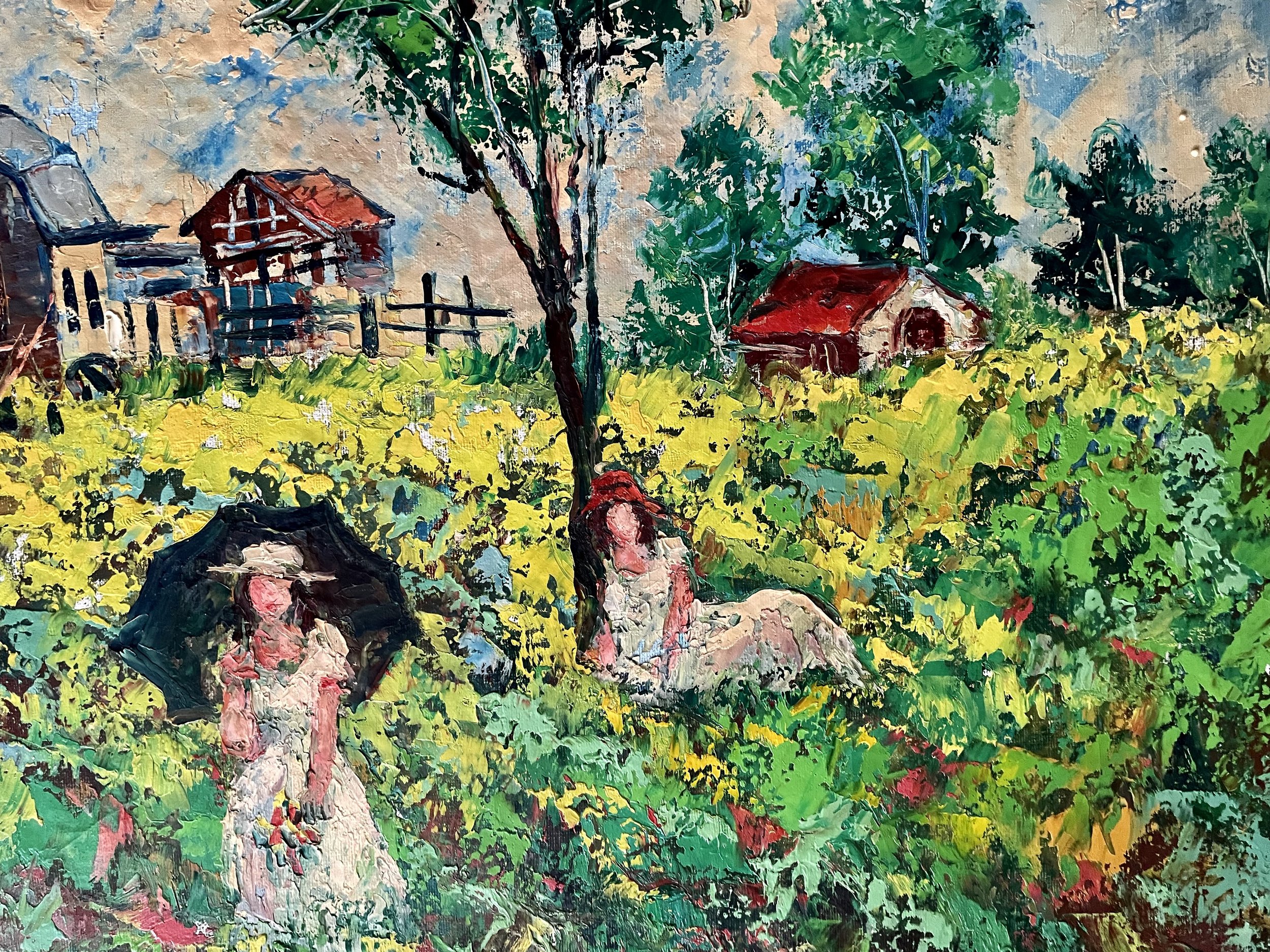
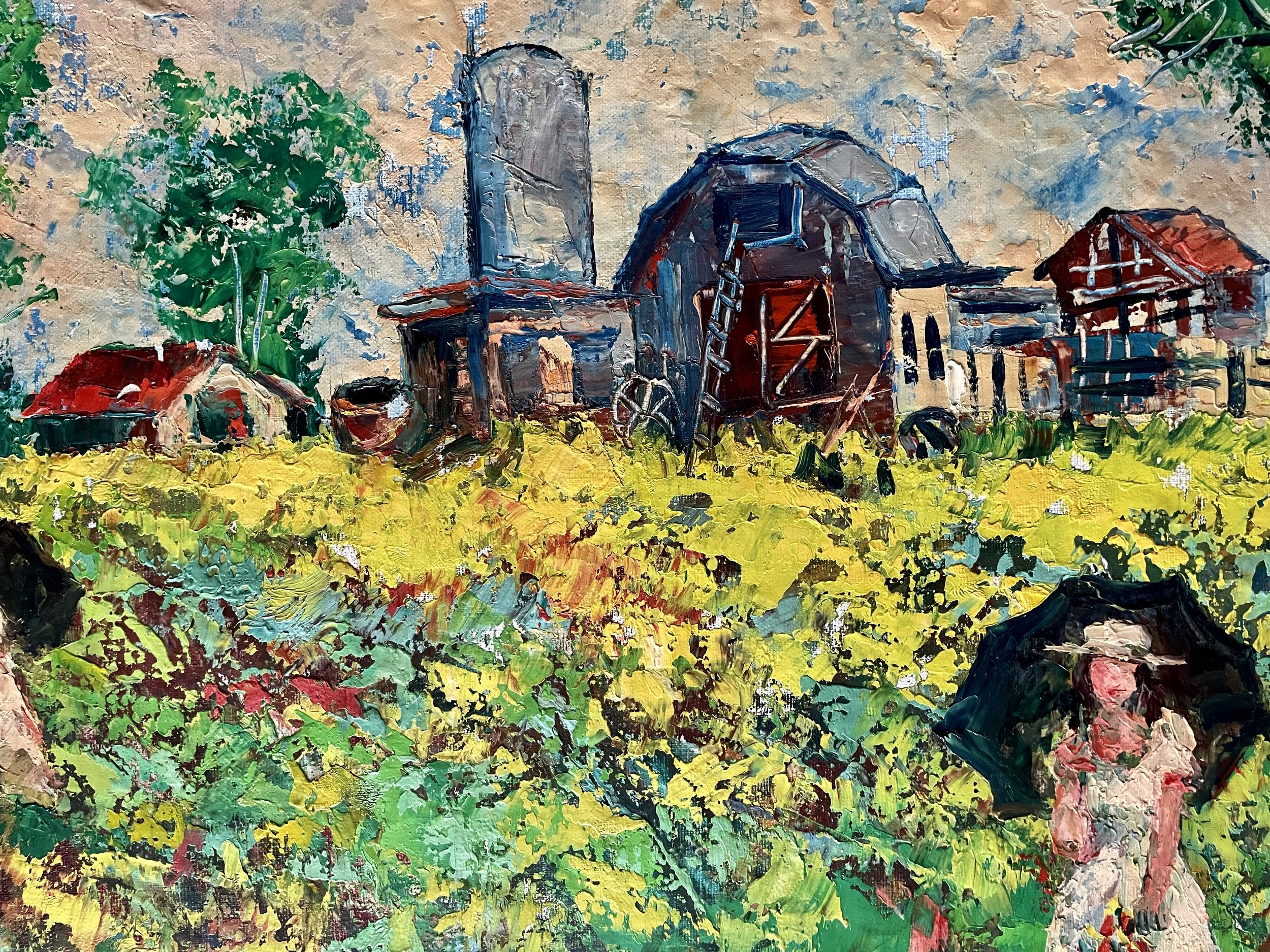
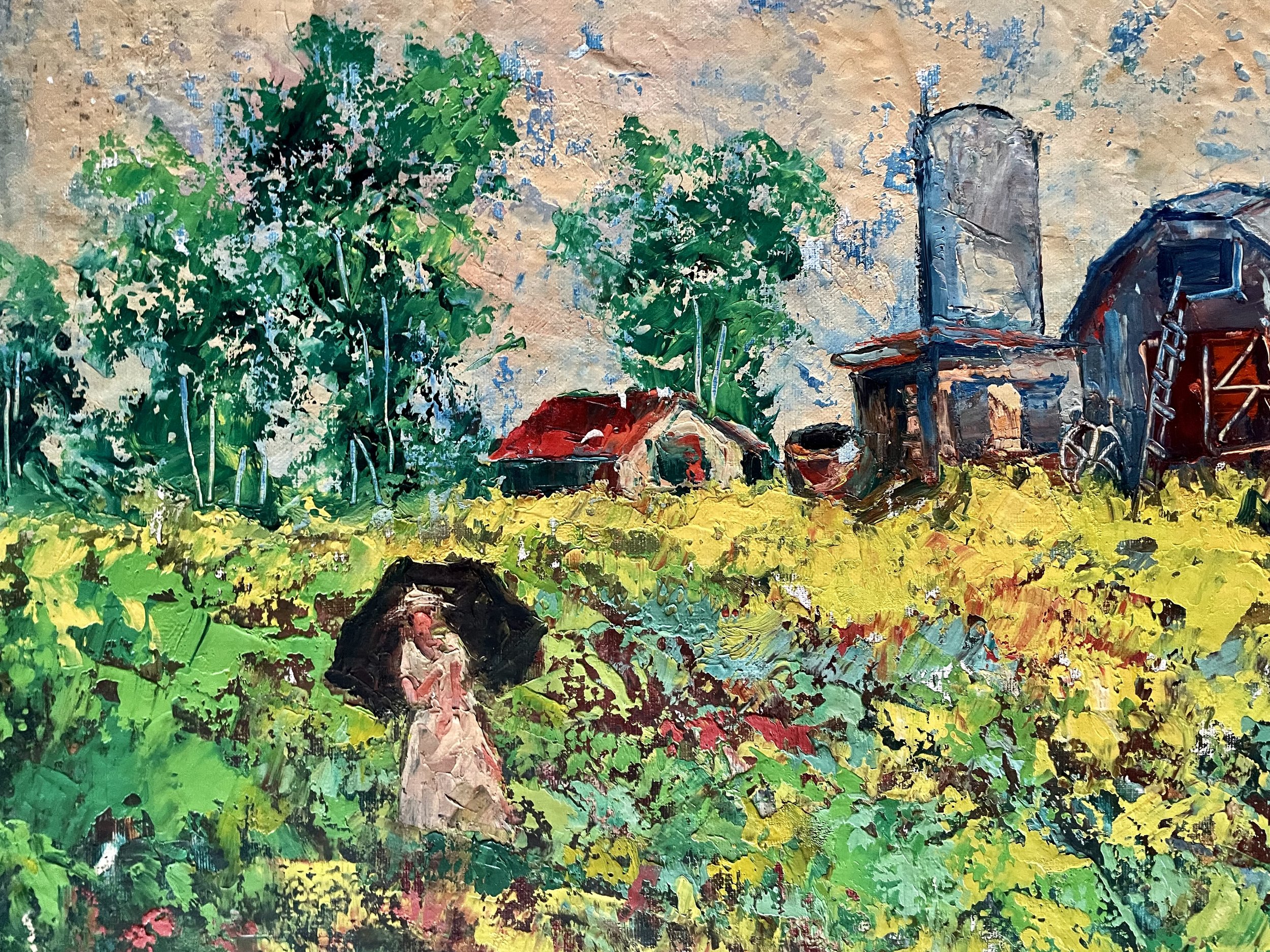
This richly textured oil painting by David Smira captures a vibrant pastoral landscape alive with color, gesture, and movement. A cluster of rustic farm buildings—complete with a classic barn, silo, and weathered wooden structures—anchors the composition, while the surrounding meadow erupts in lush layers of yellows, greens, and wild floral tones applied in energetic impasto. The sky is a dynamic mosaic of soft earth tones and fractured blue, giving the atmosphere a sense of shifting light and breezy openness.
Smira introduces figural elements—a pair of women with parasols placed near the lower corners—that subtly ground the scene in a late-19th-century romantic sensibility, reminiscent of Impressionist leisure imagery. Their presence adds narrative and historical texture without disturbing the painting’s broader celebration of nature and rural quietude.
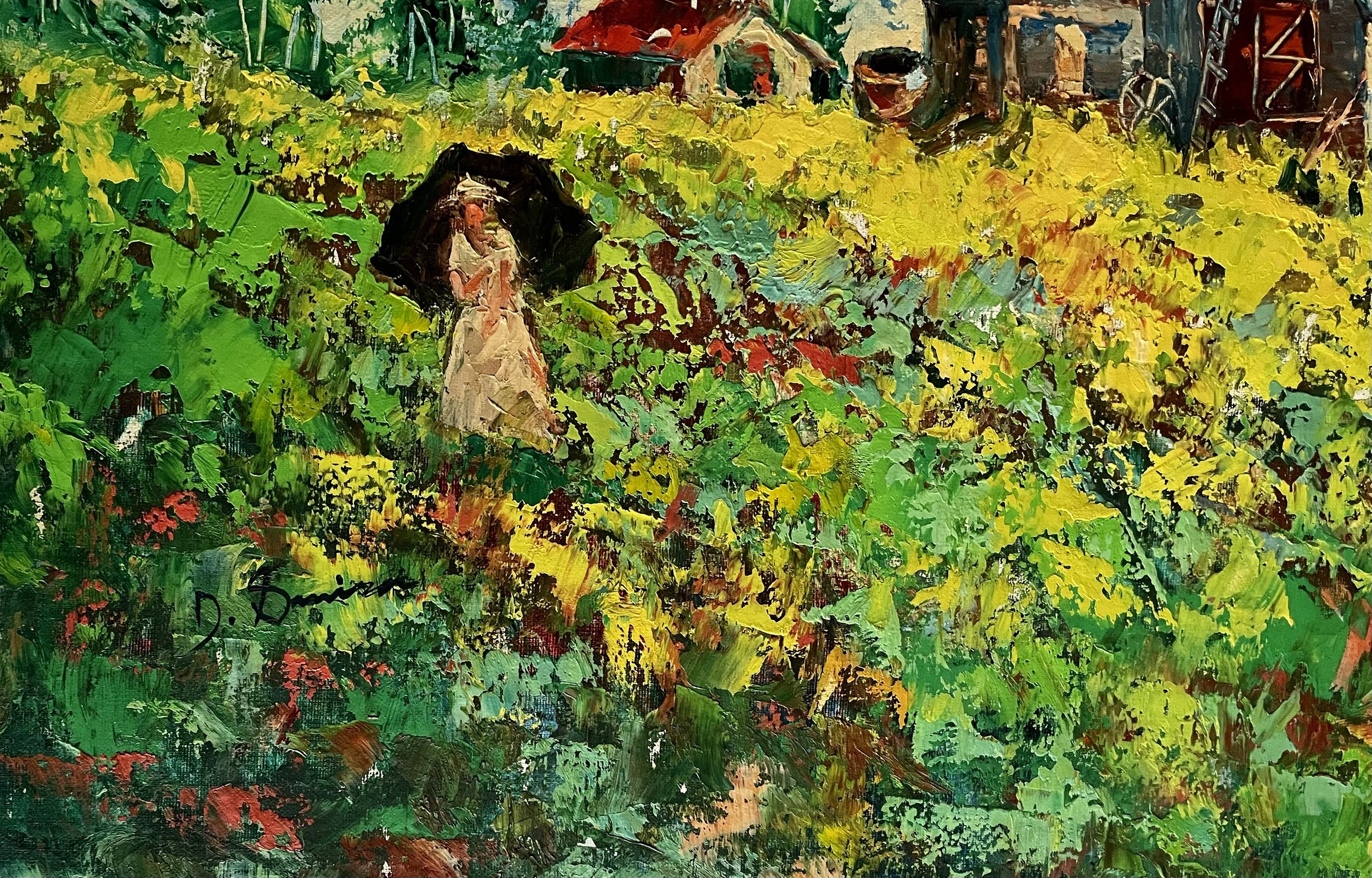
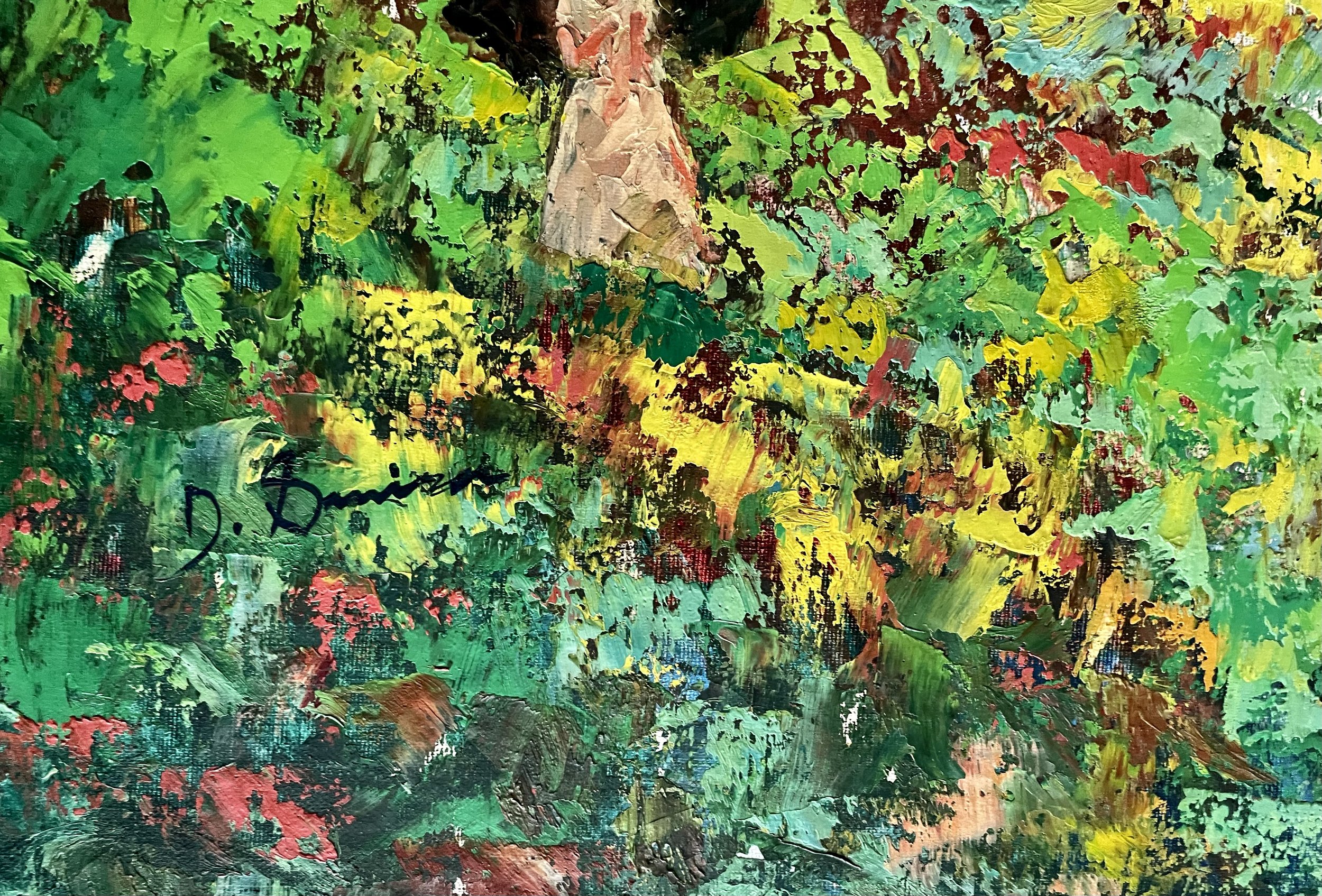
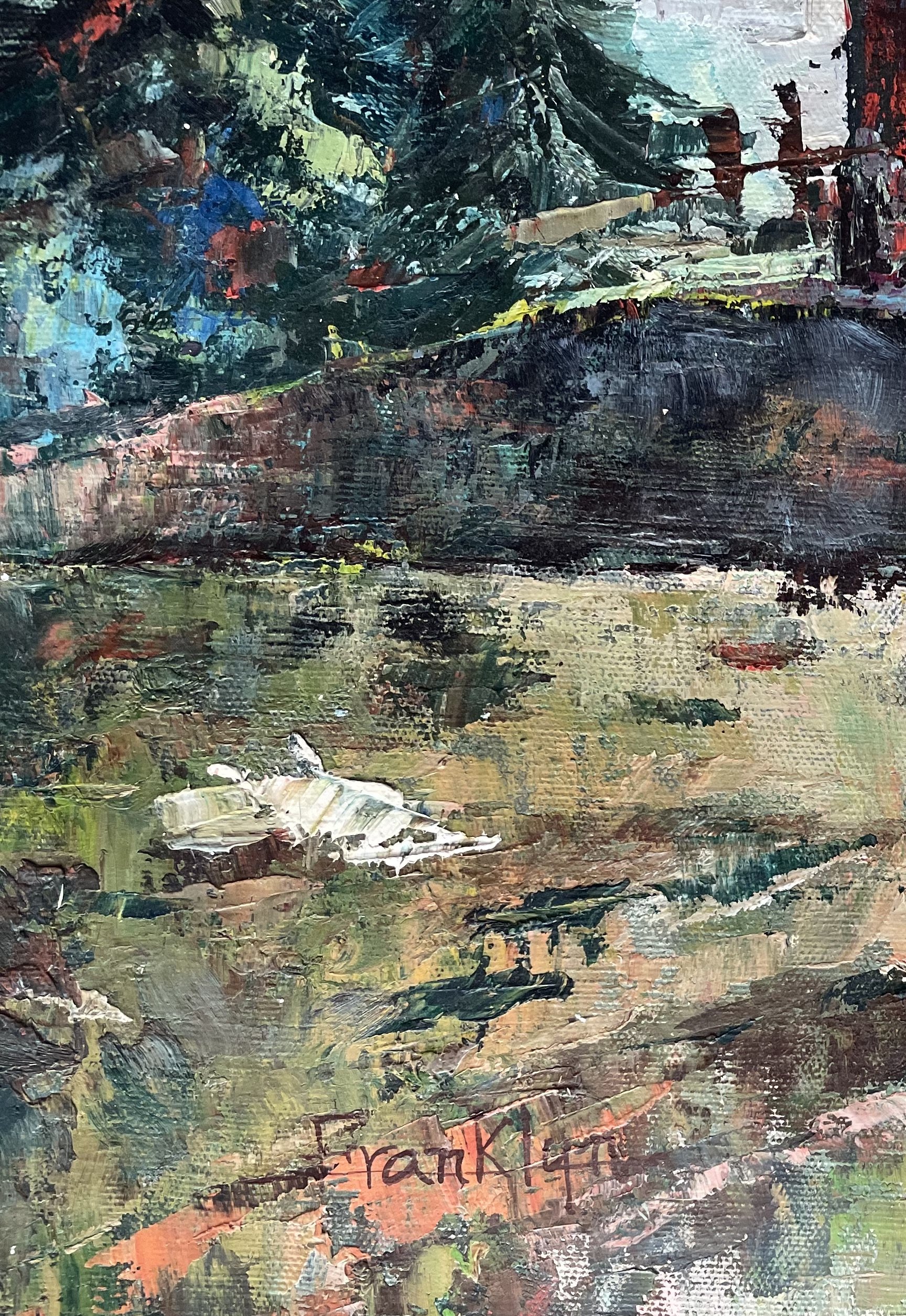
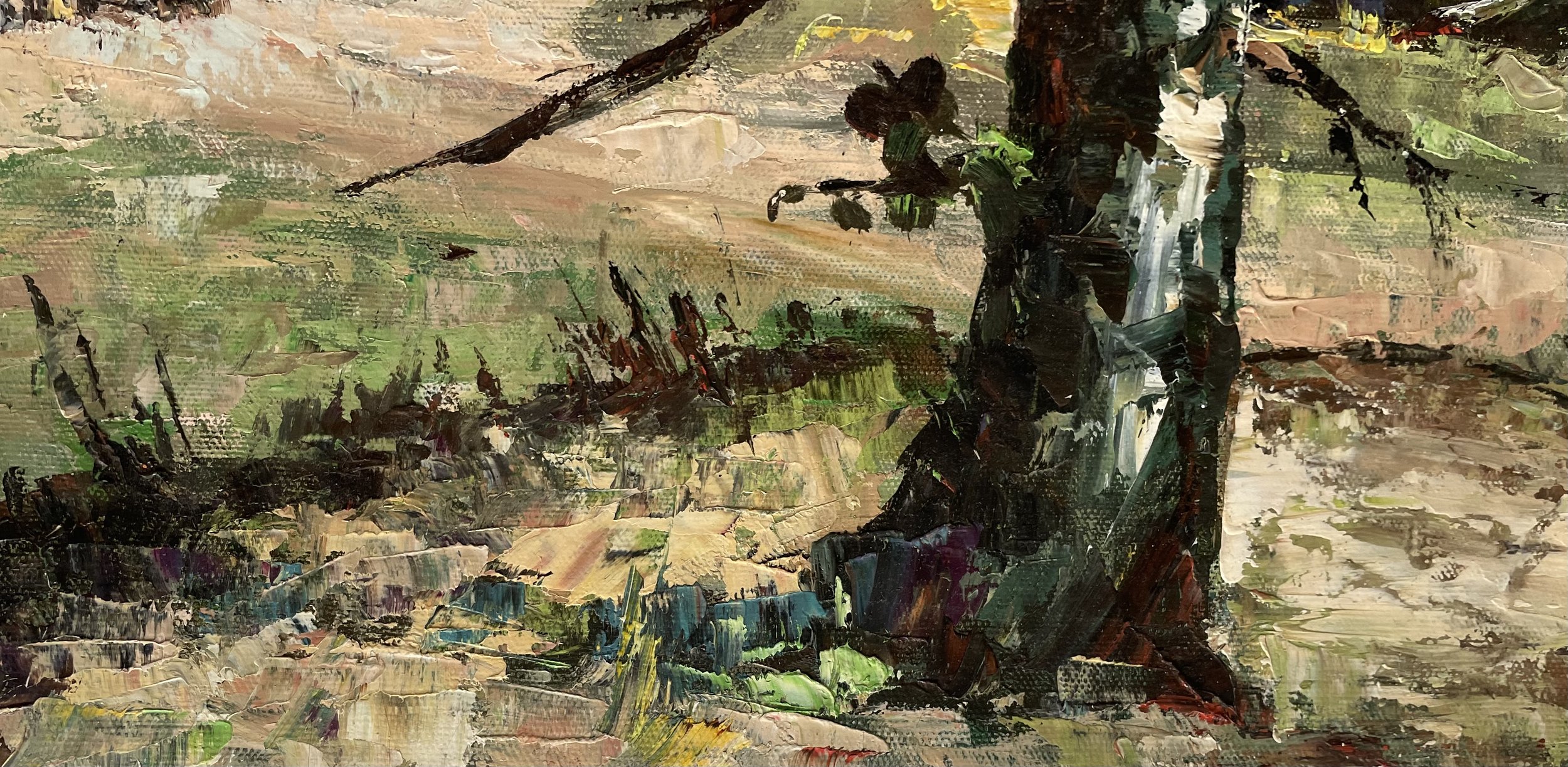
The paint surface is heavily built-up, expressive, and tactile, with palette-knife strokes that create both topographic depth and an impression of shimmering vegetation. The work simultaneously evokes Impressionism, Post-Impressionism, and early 20th-century Expressionist landscape traditions, yet it remains distinctly Smira’s through its bold palette and vigorous mark-making.
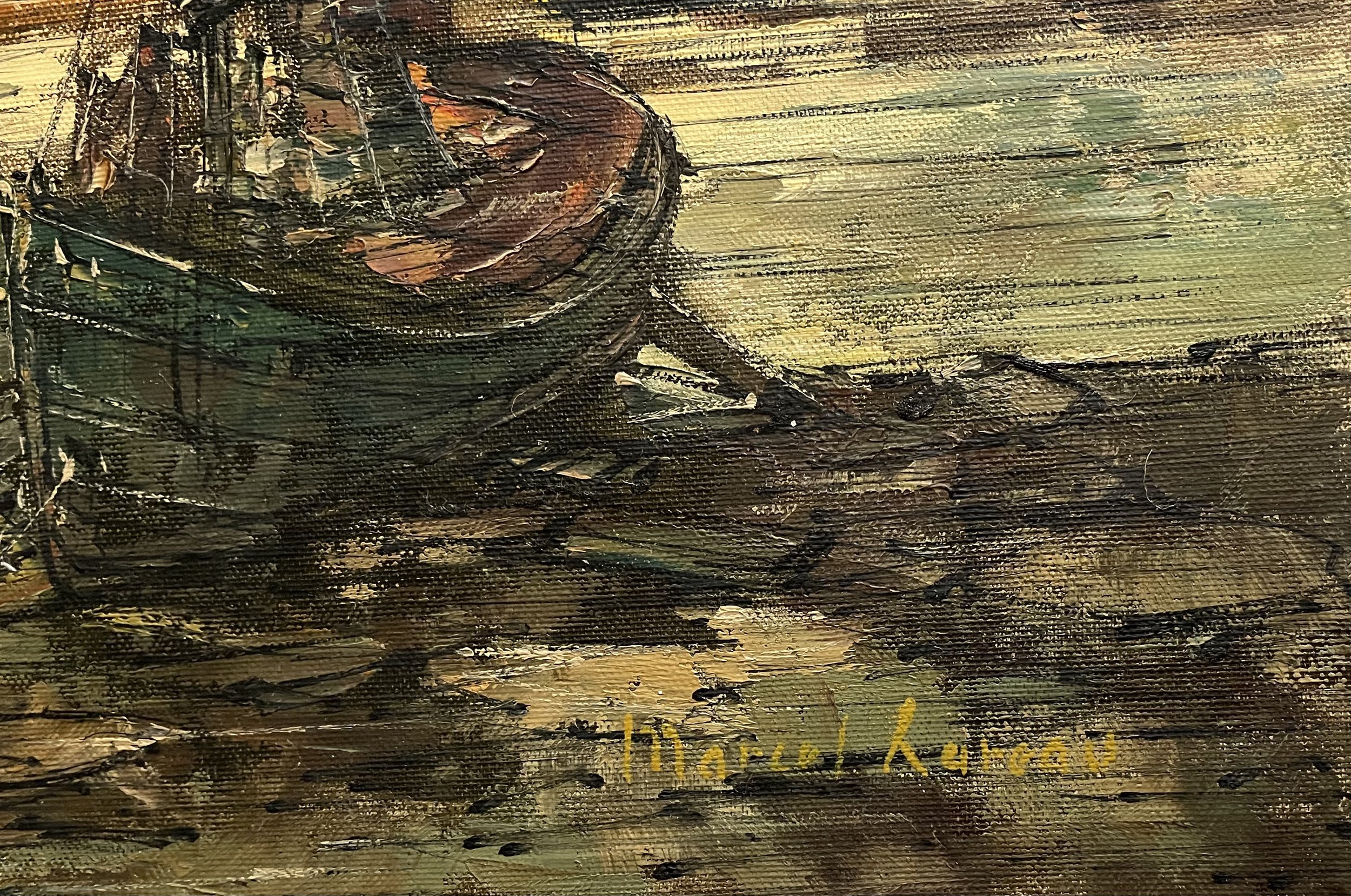
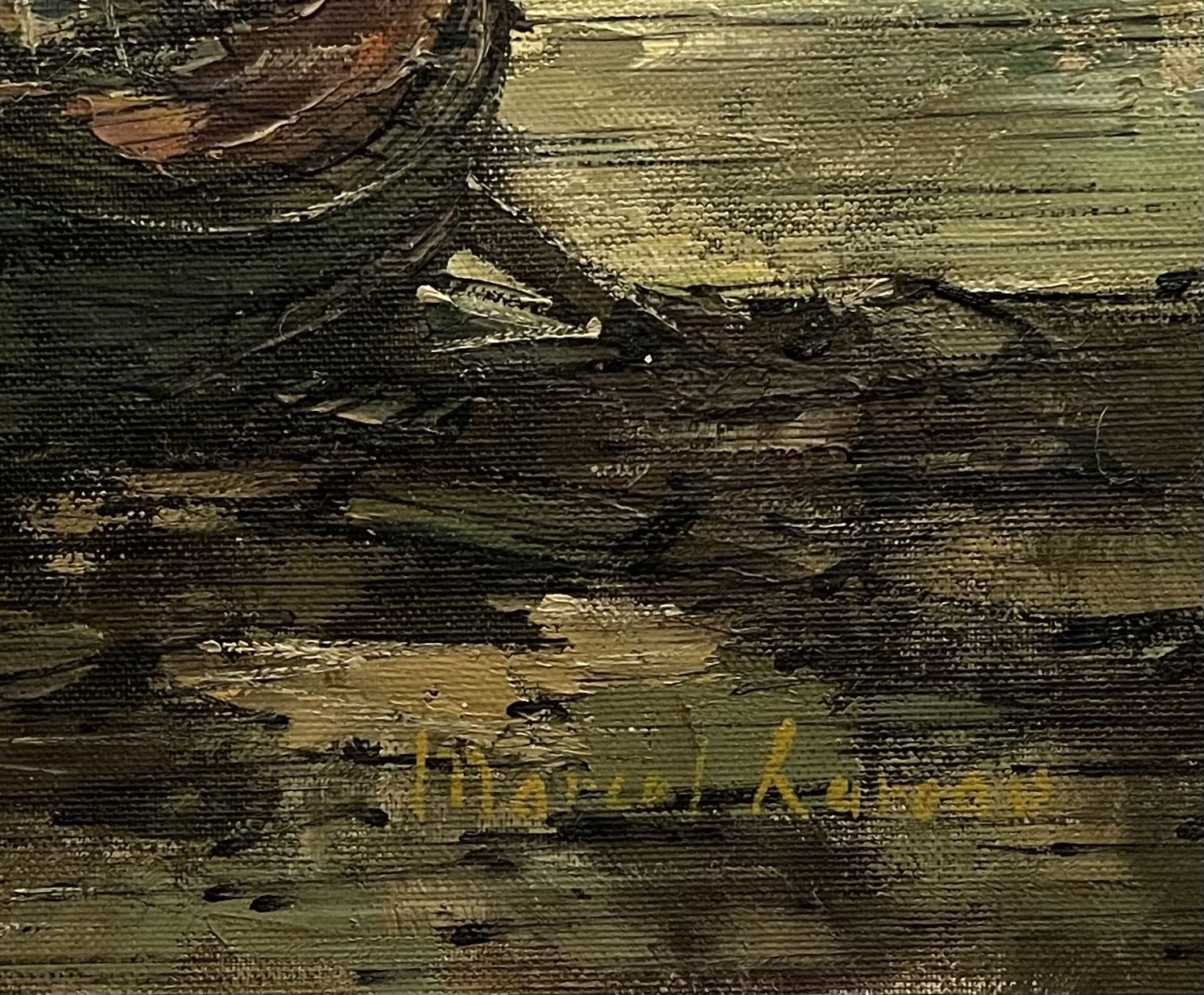
Signed D. Smira lower left.
David Smira’s technique in this painting can be characterized as:
Broken color usage
Emphasis on natural light
Figures integrated loosely within the landscape
Thick impasto application
Palette-knife dominance
Rhythmic, almost sculptural layering
Solid architectural anchoring
Compositional balance between man-made and natural forms
This hybrid approach results in a visually dynamic landscape that feels both nostalgic and contemporary.
David Smira (20th Century, Israeli-American (Israeli, b. 1941)) is a painter best known for his richly colored landscapes and expressive impasto technique. Born in Israel, Smira studied fine art in the mid-20th century before relocating to the United States, where he continued developing a style that merges classical Impressionism with modern textural experimentation.
Smira’s works often explore pastoral and rural settings infused with vibrant chromatic energy. Many of his landscapes feature robust palette-knife handling and thick pigment layering—techniques that impart depth, movement, and emotional resonance. His figures, when present, are rendered suggestively rather than precisely, emphasizing mood and atmosphere over strict realism.
Born in Tel-Aviv in 1941, David Smira began his artistic journey at the tender age of seven. After receiving his formal education at Bat Yam Academy of Fine Arts and migrating to Canada, he traveled widely, his works exhibited throughout North America. His esteemed pieces, not only showcased in the Bet-Emanuel Museum in Israel, now grace private collections around the world.
David Smira (20th Century)
Untitled Pastoral Farm Scene
Oil on Canvas
24 × 26 inches
Signed lower left
A vivid and expressive countryside landscape by David Smira, painted with a deeply textured, palette-knife technique that creates a lush surface full of movement and light. Smira’s composition centers around a rustic farmstead—barn, silo, and outbuildings nestled among sweeping fields of wildflowers—rendered in layered strokes of vibrant greens, yellows, reds, and cerulean. Two parasol-holding figures evoke a romantic, Impressionist sensibility, weaving human presence into a lively natural setting.
Smira’s signature impasto style gives the landscape both dimensionality and emotional immediacy, making this a standout work for collectors of expressive Impressionist-influenced paintings.
Condition: Excellent, with the typical intentional texture of the artist’s palette-knife technique. No visible losses or repairs.
David Smira (20th Century)
Untitled Pastoral Farm Scene
Oil on canvas, 24 × 26 in., signed lower left “D. Smira.”
A richly textured Impressionist-Expressionist landscape depicting a farmstead, wildflower meadow, and two parasol-holding figures. Executed with bold impasto and vibrant palette-knife technique.
Artist: David Smira (20th Century)
Title: Untitled Pastoral Farm Scene
Medium: Oil on Canvas
Dimensions: 24 × 26 in.
Signature: Signed lower left “D. Smira”
Date: c. 1970s–1980s (based on materials, style, and known period of activity)
Acquired in Europe, likely during the mid-to-late 20th century.
Subsequently part of a private American collection, retained in excellent condition.
Passed to the present owner through private acquisition.
This provenance aligns with Smira’s known visibility in European and U.S. regional markets during the late 20th century, particularly among collectors of expressive landscape painting.
(For Insurance, Appraisal, and Gallery Documentation)
CERTIFICATE OF VALUE & AUTHENTICATION
This document certifies that the artwork described below has been professionally reviewed for attribution, medium, date, and fair market value.
Artist: David Smira (20th Century, Israeli-American)
Title: Untitled Pastoral Farm Scene
Medium: Oil on Canvas
Dimensions: 24 × 26 inches
Signature: Signed “D. Smira” lower left
Date: Estimated 1970s–1980s
Style: Impressionist / Expressionist hybrid; thick impasto, palette-knife application
Based on the signature, stylistic attributes, painting technique, and known practices of the artist, this work is attributed to David Smira with high confidence. The impasto technique, color palette, and compositional structure are consistent with verified examples of the artist’s landscape works.
Canvas: Stable and well-stretched
Paint Layer: No losses; heavy palette-knife texture intentional
Surface: Clean, no evidence of overpainting
Overall Condition: Excellent
David Smira, Untitled Pastoral Farm Scene, Oil on Canvas, 24 × 26 in.
This richly textured oil painting by David Smira captures a vibrant pastoral landscape alive with color, gesture, and movement. A cluster of rustic farm buildings—complete with a classic barn, silo, and weathered wooden structures—anchors the composition, while the surrounding meadow erupts in lush layers of yellows, greens, and wild floral tones applied in energetic impasto. The sky is a dynamic mosaic of soft earth tones and fractured blue, giving the atmosphere a sense of shifting light and breezy openness.
Smira introduces figural elements—a pair of women with parasols placed near the lower corners—that subtly ground the scene in a late-19th-century romantic sensibility, reminiscent of Impressionist leisure imagery. Their presence adds narrative and historical texture without disturbing the painting’s broader celebration of nature and rural quietude.
The paint surface is heavily built-up, expressive, and tactile, with palette-knife strokes that create both topographic depth and an impression of shimmering vegetation. The work simultaneously evokes Impressionism, Post-Impressionism, and early 20th-century Expressionist landscape traditions, yet it remains distinctly Smira’s through its bold palette and vigorous mark-making.
Signed D. Smira lower left.
David Smira’s technique in this painting can be characterized as:
Broken color usage
Emphasis on natural light
Figures integrated loosely within the landscape
Thick impasto application
Palette-knife dominance
Rhythmic, almost sculptural layering
Solid architectural anchoring
Compositional balance between man-made and natural forms
This hybrid approach results in a visually dynamic landscape that feels both nostalgic and contemporary.
David Smira (20th Century, Israeli-American (Israeli, b. 1941)) is a painter best known for his richly colored landscapes and expressive impasto technique. Born in Israel, Smira studied fine art in the mid-20th century before relocating to the United States, where he continued developing a style that merges classical Impressionism with modern textural experimentation.
Smira’s works often explore pastoral and rural settings infused with vibrant chromatic energy. Many of his landscapes feature robust palette-knife handling and thick pigment layering—techniques that impart depth, movement, and emotional resonance. His figures, when present, are rendered suggestively rather than precisely, emphasizing mood and atmosphere over strict realism.
Born in Tel-Aviv in 1941, David Smira began his artistic journey at the tender age of seven. After receiving his formal education at Bat Yam Academy of Fine Arts and migrating to Canada, he traveled widely, his works exhibited throughout North America. His esteemed pieces, not only showcased in the Bet-Emanuel Museum in Israel, now grace private collections around the world.
David Smira (20th Century)
Untitled Pastoral Farm Scene
Oil on Canvas
24 × 26 inches
Signed lower left
A vivid and expressive countryside landscape by David Smira, painted with a deeply textured, palette-knife technique that creates a lush surface full of movement and light. Smira’s composition centers around a rustic farmstead—barn, silo, and outbuildings nestled among sweeping fields of wildflowers—rendered in layered strokes of vibrant greens, yellows, reds, and cerulean. Two parasol-holding figures evoke a romantic, Impressionist sensibility, weaving human presence into a lively natural setting.
Smira’s signature impasto style gives the landscape both dimensionality and emotional immediacy, making this a standout work for collectors of expressive Impressionist-influenced paintings.
Condition: Excellent, with the typical intentional texture of the artist’s palette-knife technique. No visible losses or repairs.
David Smira (20th Century)
Untitled Pastoral Farm Scene
Oil on canvas, 24 × 26 in., signed lower left “D. Smira.”
A richly textured Impressionist-Expressionist landscape depicting a farmstead, wildflower meadow, and two parasol-holding figures. Executed with bold impasto and vibrant palette-knife technique.
Artist: David Smira (20th Century)
Title: Untitled Pastoral Farm Scene
Medium: Oil on Canvas
Dimensions: 24 × 26 in.
Signature: Signed lower left “D. Smira”
Date: c. 1970s–1980s (based on materials, style, and known period of activity)
Acquired in Europe, likely during the mid-to-late 20th century.
Subsequently part of a private American collection, retained in excellent condition.
Passed to the present owner through private acquisition.
This provenance aligns with Smira’s known visibility in European and U.S. regional markets during the late 20th century, particularly among collectors of expressive landscape painting.
(For Insurance, Appraisal, and Gallery Documentation)
CERTIFICATE OF VALUE & AUTHENTICATION
This document certifies that the artwork described below has been professionally reviewed for attribution, medium, date, and fair market value.
Artist: David Smira (20th Century, Israeli-American)
Title: Untitled Pastoral Farm Scene
Medium: Oil on Canvas
Dimensions: 24 × 26 inches
Signature: Signed “D. Smira” lower left
Date: Estimated 1970s–1980s
Style: Impressionist / Expressionist hybrid; thick impasto, palette-knife application
Based on the signature, stylistic attributes, painting technique, and known practices of the artist, this work is attributed to David Smira with high confidence. The impasto technique, color palette, and compositional structure are consistent with verified examples of the artist’s landscape works.
Canvas: Stable and well-stretched
Paint Layer: No losses; heavy palette-knife texture intentional
Surface: Clean, no evidence of overpainting
Overall Condition: Excellent